#106: Rose Lyddon
“Nothing is so bad that it can’t be survived and eventually turned into an asset.”
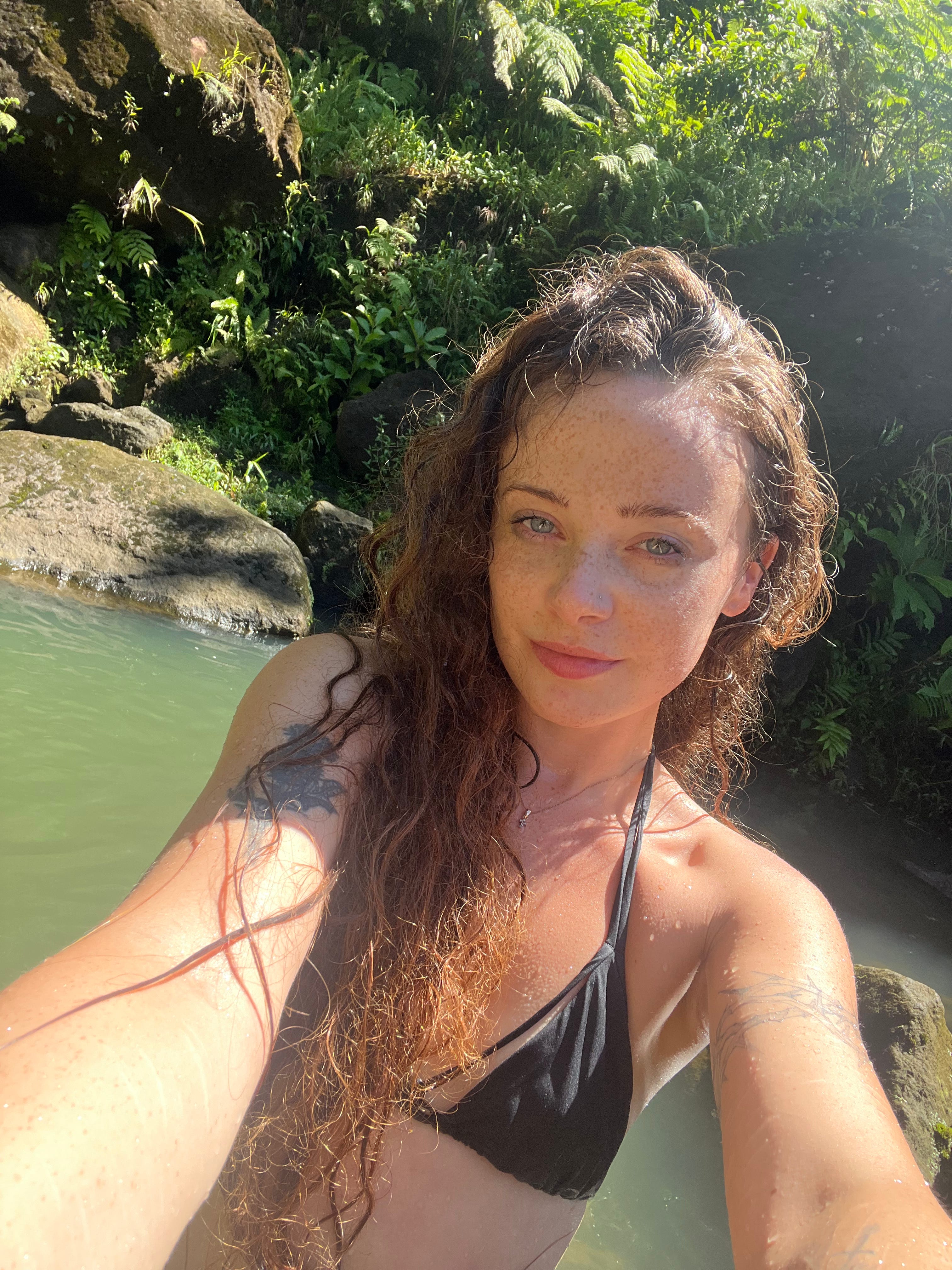
Rose Lyddon is a writer and researcher with a focus on theology, medieval history, and contemporary culture. She writes the newsletter, Keep Your Mind in Hell and Despair Not, and has had work published in Unherd, The Mars Review of Books, and The Spectator.

#106: Rose Lyddon
London, UK
What does health, or being healthy, mean to you?
I’ve had pretty serious mental health symptoms since I was a child, so my priority has always been to figure out and manage whatever’s going on with my mind. Over time, I’ve come to see that my psychological and emotional health is always connected to the physical, spiritual, social, and environmental domains. A big focus is keeping my hormones balanced and minimizing stress, but I also need a lot of stimulation and like living in a big city where there’s always something going on. I find that what I need to stay well changes frequently, so the most important thing is to be attentive and respond flexibly.
How would you describe your current lifestyle?
I’m not a lover of routines. I like having the freedom to do whatever I want day to day. My worst nightmare would be having a mortgage and working a nine-to-five, batch-cooking all my meals on Sunday, probably something like lentil stew that’s full of phytoestrogens and promotes endotoxin in the gut.
I live alone, which is a non-negotiable to keep my nervous system calm, and I spend a lot of time by myself. I need at least eight waking hours alone to feel like a person. I go outside every day, try to walk in the woods as much as I can, see my friends at least a few times a week, and go to a lot of films and plays and literary events, which keep me inspired and socially connected. Whenever I get the urge to isolate, I make sure to meet up with someone or go to an event.
I have some habits that keep me well: red light therapy, which I do on one of those full-body beds; time in the sunshine or a tanning bed when the British weather makes it impossible; a nutritious diet; regular exercise; mindfulness and meditation; prayer and Eucharistic adoration; service; socializing with people with whom I feel comfortable. I go back and forth on sobriety, but it’s important for me to have extended periods of not drinking.
My work is writing and research and it’s not productive for me to expect work to happen every day. Sometimes my mind just isn’t there. I can spend two weeks staring at a screen and writing sentences that just wind me up because they’re so bad, and then one day I’ll sit down and write seven thousand words easily, and I’ve never been able to work out the determining factors that make it happen. Creative work feels like channelling something external to me. Actual writing takes up very little of my time. Much more is spent lining up the internal and external conditions that allow writing to happen.1
How do you start and end your days?
I wake up at 7:30 every day and make matcha with collagen or iced coffee, both with honey. I was avoiding coffee for ages, but I’m back into it this summer. I think you crave what you need and feel turned off by what you don’t. I like the smell of freshly ground beans in my flat in the morning. The collagen ensures that I start the day with protein.
I’m meant to take Elvanse, Vyvanse to Americans, every morning, and I’m trying to get into the habit of taking it more often because I do need it, even though I’d prefer to be unmedicated. The medication I take at night, Clonidine, is also technically for ADHD, but gets prescribed for PTSD-related hyper-vigilance and nightmares and for migraines, and it’s really effective in treating those things for me.
I’m not a morning person and have to make sure I don’t spend hours in bed, so I usually take my skincare and makeup to the gym and shower and get ready there. I’ll either do a pilates or yin yoga class, or just swim and steam/sauna. On sunny days, I’ve been switching the gym for Hampstead Ladies’ Pond, which I’m so lucky to live close to. I like cycling there and getting ice cream in Highgate. My favorite ice cream is Brickell’s roasted strawberries flavor. The ingredients are just cream, milk, strawberries, sugar, egg yolk, and salt.
At night, I usually have a bath by candlelight with essential oils and magnesium salts. I use this vitamin E oil on my skin afterwards, which helps with inflammation.
I try to spend a little time in prayer, even if it’s just the Ignatian Examen: looking for the moment of greatest consolation in the day and the moment of greatest consolation. I write a gratitude list with at least ten items and make a hot chocolate; my favorite is Knoops 43%. I like to use unhomogenized whole milk, which luckily I can find in a cheese shop in my neighborhood.
I’ve always struggled with insomnia and still have periods where it gets really bad. It makes me more insane than anything. I’m sleeping well right now and often falling asleep early, at eight or nine in the evening. Sometimes I seem to need more sleep and I go with whatever my body is asking for, but I make sure to wake up at the same time every morning as I think this is the basis of stability.
Can you recall a moment when you became more aware of your health, or your relationship to it changed?
I got diagnosed with C-PTSD a year and a half ago. I already had a diagnosis of PTSD, but understanding it in those terms helped me to admit how deeply it was affecting me and to prioritize recovery. I took medical leave from my PhD for a year and really focused on restabilizing my nervous system. I’d been such a mess before, physically and mentally. I got so exhausted whenever I went outside because the hyper-arousal was so intense. I forgot how to laugh, how to relate to people. I felt like I’d lost some essential component of my humanity that allowed me to connect to other people and the world around me.
The physical symptoms were really hard as well. I was so nauseous and struggled to eat solid food for about nine months, during which time I lost a lot of weight and really felt like I was dying. I was underweight, my heartbeat became irregular, and my bones stuck out and it would hurt to lie in bed or take a bath. I had a lot of weird dysautonomia symptoms, like random fevers, not being able to regulate my body temperature, and pain and inflammation in my joints and connective tissue. I was also really angry about it because it felt like someone else was hacking into my body without my consent, like an extension of the control I’d experienced through the abuse itself. But these were all symptoms of chronic stress, and I had to let go of the anger and resentment which was keeping me in that state of stress. I had to accept what was happening and focus on getting better.
I hate the word “resilience,” but my relentless determination to survive is one of my favorite things about myself.
What’s your relationship to self-healing?
I love that I’ve been able to heal myself. I hate the word “resilience,” but my relentless determination to survive is one of my favorite things about myself. I’ve been in such bad places, and I’ve always brought myself through, even though at the time my decisions seemed insane. Like running away to Mexico when I was deep in PTSD. Before then, I’d thought of myself as someone who couldn’t cope and felt scared to travel because I thought I was too anxious and wouldn’t be able to manage it, so it gave me such a sense of confidence and self-respect to find out that I could. I stayed for two months and then went to the Caribbean. I spent most of it just sitting on the beach, blank-eyed, staring at the sea, drinking fresh coconuts and swimming and coming back to my body.
I’ve always had to rely on myself. I was raised by a single mother who loved me and gave me a happy, joyful childhood, but wasn’t someone I could reliably turn to. We never had any money, so when I started having mental health difficulties, there was no chance of private therapy or anything like that. I left home when I was sixteen and found that I did best when I accepted full responsibility for my life. I’m pretty good when things fall apart because I know that I can come back from anything, and I can always trust that scrappy, determined, self-reliant part of myself to show up.
There’s another side to this, I suppose. Someone pointed out that all my tattoos are very spiky and aggressive, with swords and thorns in them, as if I’ve put signs up on my body saying “stay away,” and there’s probably some truth to that.
In terms of managing my mental health, I tend to avoid the NHS because it’s frustrating and stressful to have to advocate for yourself and it very rarely gives you what you want. I’ve spent years on waiting lists and I think it did damage to my self-concept and sense of competence to always have to present myself as a sick person to get the treatment I needed. I grew up not receiving any conventional medication at all because my mother is a healer and homeopath, but from fourteen until last year, I tried almost every class of antidepressant, mood stabilizer, or antipsychotic. I desperately wanted to find the perfect drug that would finally fix my moods, but I never landed on it.
I’ve also developed my own thing, which I call perspective therapy but might also be called “getting a grip.”
I manage my moods to the best of my ability with diet and lifestyle. If I spend November really focused on exercise, eating well, and staying socially active, I can avoid falling into the kind of depression that leaves me unable to get out of bed or read or look after myself, but I still keep my winter fairly clear of work commitments because I know I won’t be able to meet them. In the spring, I tend to have mixed episodes where I make very stupid decisions and cause problems for myself, and in the summer, I sometimes get hypomanic, which is great until the inevitable crash. I try to accept that this is the way I am and focus on mitigating the consequences. I’m lucky that I’ve built a life that can withstand instability.
Do you work with any practitioners, texts, or modalities on a regular basis?
I’m a Catholic and I’ve been a Christian since I was 21, though I’m more casual about it than I used to be. I pray the rosary and go to Mass most Sundays. I like the Dominican Rite Mass, which is sung in Latin and is very contemplative but doesn’t feel as self-consciously trad or political as the Traditional Latin Mass. I used to be a daily Mass-goer, which is bizarre to think about now, but it’s still the basic ground of my life and the center of everything.
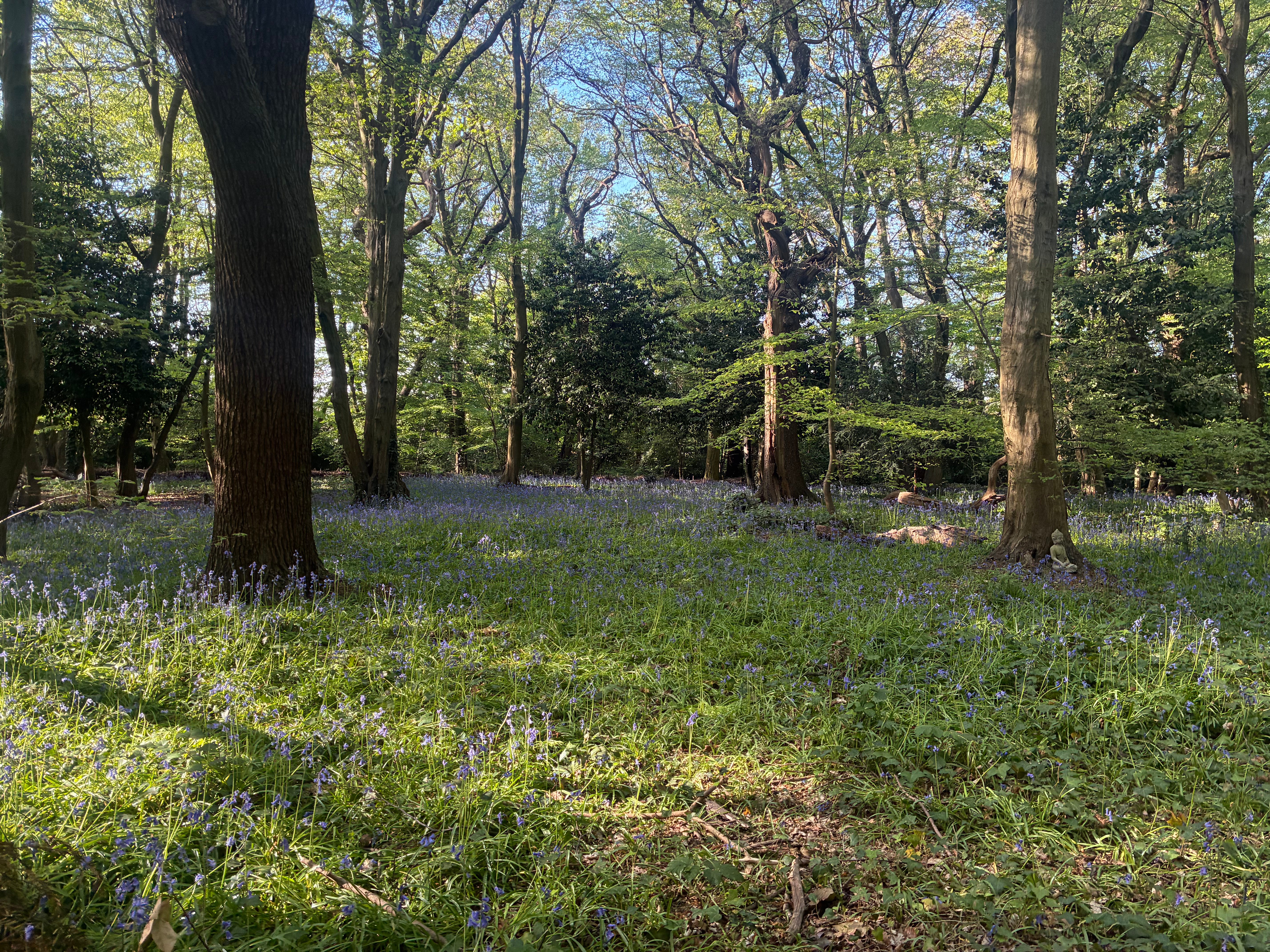
I was raised pagan, the New Age/Celtic type, which I really rejected and was such a snob about in my adolescence, but I think it gave me a strong sense of connection to the land and its rhythms. I have to feel connected to nature: I crave bodies of water and oak trees and hills. I couldn’t live anywhere in London except North, where I have all those things a short walk from my door.
I believe in magic, miracles, and divine providence, and I think the world is more mysterious than we know. Often, I rely on intuition and feel like particular people or ideas are brought into my life at a particular time for a particular reason, and I’m open to being guided in surprising directions. I have no plan for my life or any expectation of how it should unfold. I think one of my most repeated mistakes has been clinging to things that are no longer needed because I’m afraid to trust in God and let go, but when I do, I find that new doors open everywhere that would otherwise have been invisible to me. Marian devotion has also given me a profound sense of being looked after and loved.
I’ve done a lot of therapy in my life, though I’m not in therapy now. I find skills from Dialectical Behavioral Therapy helpful and still use them a lot, especially ones like opposite action, the TIPP skills, building mastery, coping ahead, non-judgmentalness, mindfulness of thoughts, and radical acceptance. DBT was designed by a psychologist who was raised Catholic, became a lay religious sister and then trained as a Zen Master, and the core “dialectic” is between acceptance and change, or between acceptance and repentance. It’s a very spiritual therapy, really, though I think this is missed in some of the watered-down versions that are delivered.
I’ve also developed my own thing, which I call perspective therapy but might also be called “getting a grip.” This involves watching lots of documentaries about the Second World War and reflecting on the ordeals which almost every person experienced and nevertheless went on and built new lives afterwards and, on the whole, demonstrated virtues of courage and endurance and sacrifice and often bewildering good humor. After a recent break-up, I went to the Imperial War Museum. It really does work for me like nothing else. I guess it’s partly about hope and partly about the unconquerable human spirit.
I like reading biographies and memoirs for the same reason, especially of people who lived in the interwar period and through the wars. It’s always incredible to me what kinds of mad heroism or relentless grit people can muster.
How do you reset?
I go abroad. I can’t stay in England for more than two or three months at a time before the itch to leave becomes overwhelming. I love Dahab, in Egypt on the edge of the Red Sea, and I went there for my thirtieth birthday and spent ten days doing yin yoga and qigong and getting shiatsu-seiki and deep tissue massage. My masseuse told me I have a lot of anger stored in my liver, which is true.
I fell in love with the Caribbean a few years ago and have been to six islands since, but my favorite is still, and I think always will be, Dominica, which has hot springs under the sea so that you can swim in water that’s almost too hot to sit still. I’m hopefully going back there this winter to work on a cacao plantation for maybe six months, looking after guests at their Airbnb. Last time, I stayed in an off-grid eco-lodge with a rainwater shower and would wake up and pick fallen starfruit and guava and passion fruit from the garden, and these giant lizards would skitter into the undergrowth whenever I moved. At night, there were these crazy lightning storms where the whole sky would light up blue with no thunder. It feels more alive than anywhere I’ve been.
When do you feel the most nourished?
When I’m seeing my friends and it’s sunny and hot and I’m writing and reading and going to interesting conferences or talks and having lots of ideas. There are periods when I have more energy and everything seems to connect and flow more easily and exciting things seem to happen at greater rates. I generally take a lot of joy in life; I’m easily cheered up by seeing birds or eating a nice cake, and I fill my life with things that make me happy. I avoid people who express frequent resentment and spend time talking and thinking about things that make them unhappy. My life improved considerably when I started spending time with happy, inspiring, successful people, the kind of people who have an idea and make it happen instead of talking about all the obstacles in their way.
Do you have a favorite meal?
My diet consists of milk, cheese, red meat, shellfish, fresh fruit, chocolate, and a variety of nootropics which may or may not do anything. I gravitate towards foods which are concentrated sources of nutrition. I don’t have much appetite, so when I eat, I want it to be feeding me and giving my body what it needs. I recently found out that I have the homozygous mutation on the MTHFR gene, which means I process folate at between 10-30% efficiency and have to supplement methylfolate and B12, so I take these every day and have a cupboard full of other supplements which I take whenever I remember, but I prefer to get nutrition from food where I can. I do regularly supplement a B-vitamin complex, magnesium, vitamins D and K and vitamin E. I avoid foods that are estrogenic or high in anti-nutrients and prioritize antioxidant foods that support progesterone function. I eat liver whenever it’s on the menu or get calf’s liver to cook at home; I like sweetbreads and heart, as well. My favorite foods are rare steak, oysters, tuna sashimi, champagne mango, and hot chocolate.
What advice would you give your younger self?
It’s not that deep. I used to have such anguish and shame and guilt about my actions, and it really didn’t matter that much. I think I was afraid of myself for a long time because I felt such a lack of control and was always worried about what I’d do, but actually, now that I’m less absorbed with self-critique, I feel much more comfortable. I like myself, which I think younger me would struggle to imagine, but I also think about myself less and take everything less seriously. In this sense, it’s a blessing for your life to fall apart or for something terrible to happen, because you come out of it having had a kind of ego death and feeling much less urgency and pressure. I’m not ambitious anymore and my priority is just having a nice time and being happy.
What advice would you give to the person reading this?
You can always radically change your life. Almost nothing that affects you is necessarily permanent, especially if you take into account the miraculous. Nothing is so bad that it can’t be survived and eventually turned into an asset.
What would you like to see or create more of in the world?
I’d like to write a really good novel.
Related reading:
“I write best in bed, which is unfortunate because it’s not good for me, but I do most of my research and initial drafting in one of the libraries where I have membership and then do the final bit curled up under a duvet. I need to lock in and go goblin mode and hyperfocus for eight hours and eventually come to and realize I’m dehydrated and it’s dark outside and my shoulders are knotted. But you have to work with what you have.”