

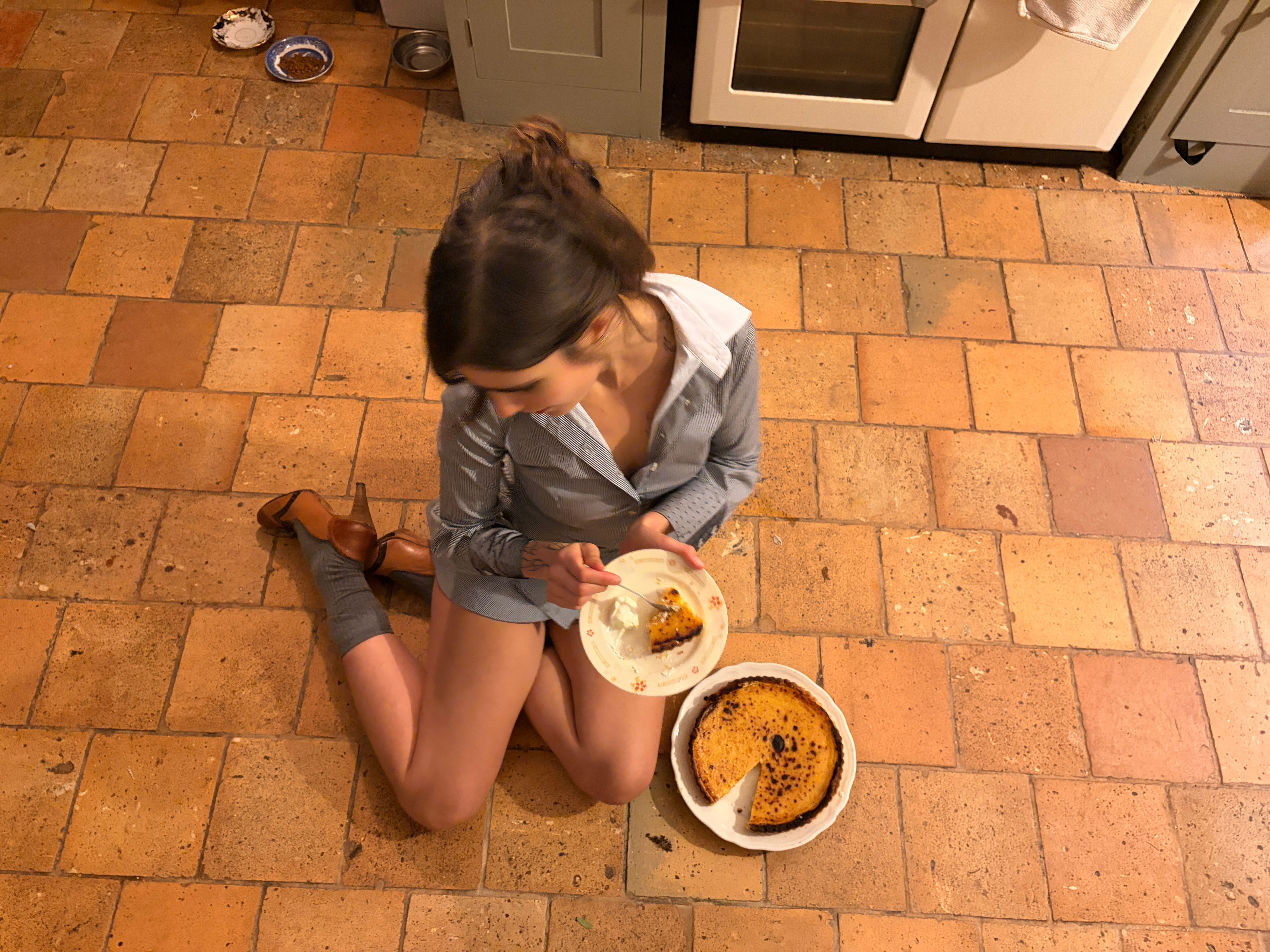
Morgana is a London-based writer and cook. She runs Food Relics, a multimedia project spanning language, food, and desire.

#112: Morgana Rubini
London, UK
What does health, or being healthy, mean to you?
I see myself as quite feral. I think less about being “healthy” than I do about taking care of myself. I experience a kind of mothering distance between my caring self and the self being cared for: I want to look after myself as though I am my own plant. When I cook something beautiful just for myself, I think, Look what you have done. Look how you have cared for yourself.
And I want to always be allowed to be dirty, too. I think that is important in a way, those wild parts of the self.
For me, health is less about discipline and more about kind routines. I usually know what feels good for me, but I am not always in a position to give myself those things. I feel like a Sim, with all these needs constantly rising and falling, trying to attend to each one. It can be difficult to get everything right.
At the moment, I am really thinking about health in relation to money. A lot of the things we associate with being healthy are privileges. You are not going to buy supplements when the choice is between those and a supermarket shop.
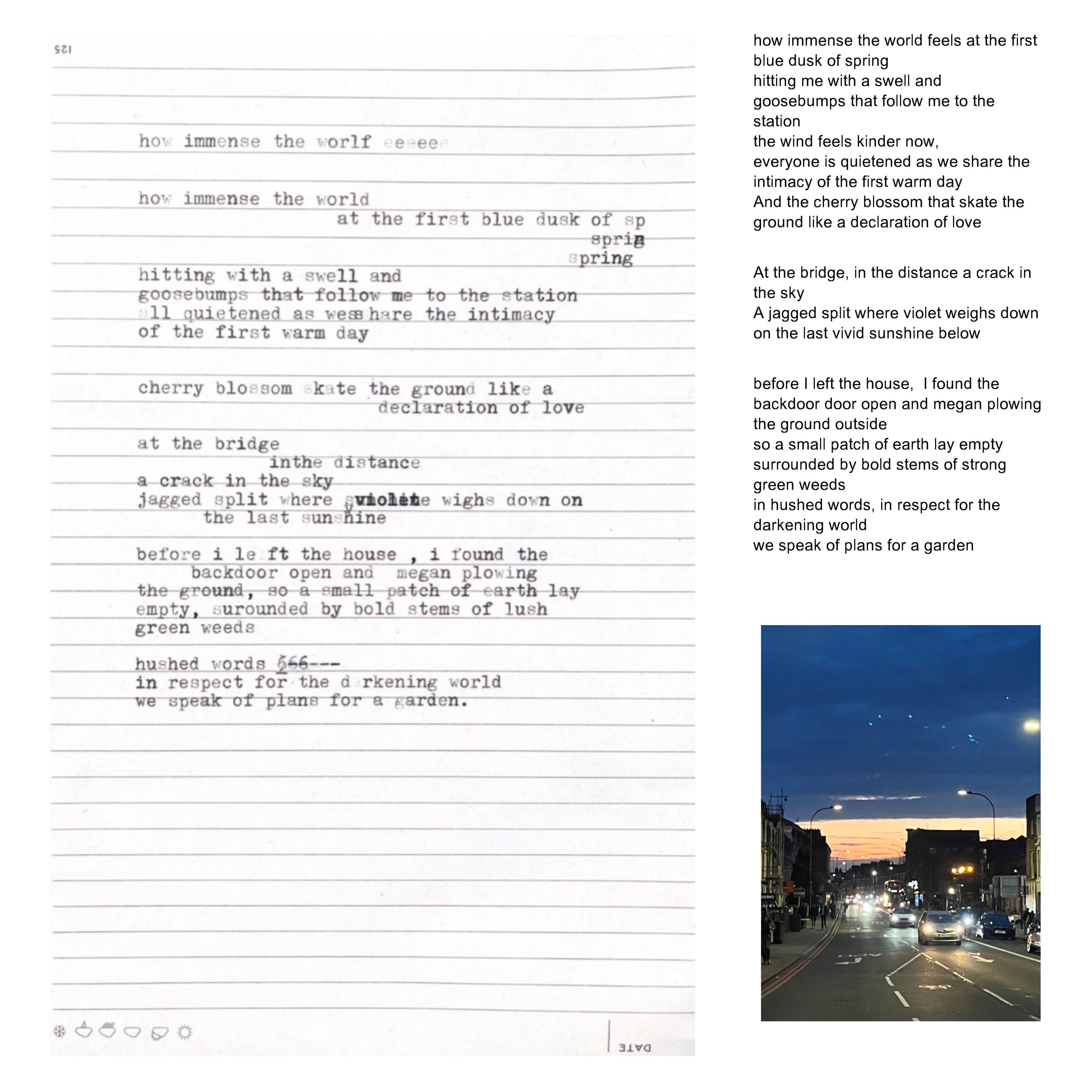
Health, to me, is also about how cared for we feel by the world, and how we care for it in return. I believe in a reciprocal relationship with the world: listening to it, noticing the seasons, and paying attention to what is growing and changing. I think that is how we find newness, without the destructive search for instant dopamine highs.
How would you describe your current lifestyle?
I think I am slowly moving closer to the life I want to live. I have more time to write and more time to read, although I still work a part-time job for money. I am out of the swamp, for the most part, but I still have to scrounge and hustle because I am broke as hell.
I have found ways to live luxuriously in the city without having much money. I know where to find free things, and I rely on a kind of reciprocal hospitality. I go to private views and events with free drinks and food, so I can spend time chatting to a friend without spending money. I visit friends at their workplaces and they feed me or give me a drink, and I do the same for them in return. I walk places, I get given clothes, and I strap myself to my desk at home because, in London, the moment you leave the house you start spending money.
How do you start and end your days?
I wake up with a lot of energy. I tend to open my eyes and almost shoot upright. I feel very excited by life at the moment, especially in the mornings. It is affecting my sleep slightly because I wake up too early and immediately start thinking about all the things I want to do.
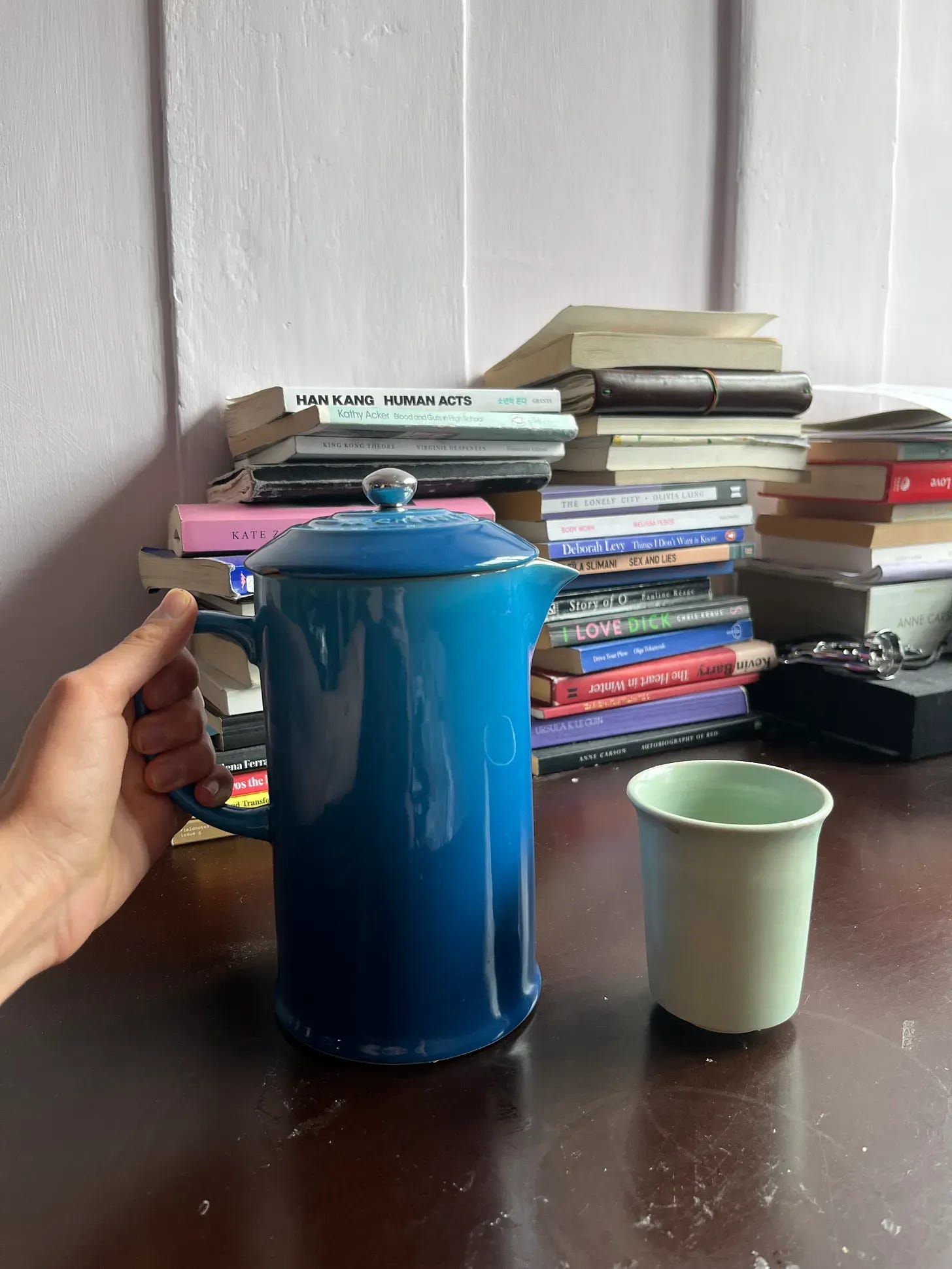
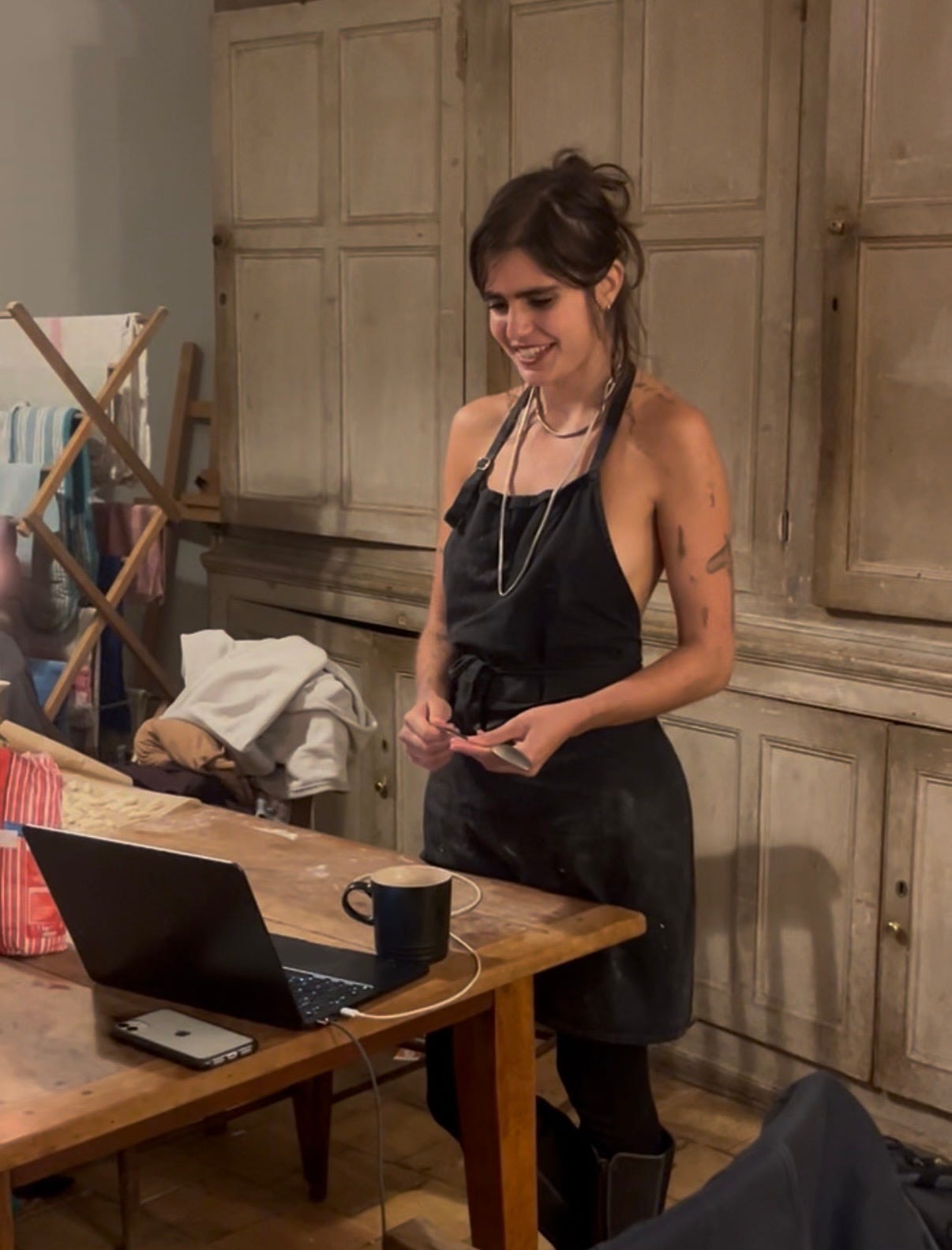
I make coffee in my big blue Le Creuset French Press and have it with a square of dark chocolate. Then I sit in monkey position at my desk for a long time. Now that it is sunny, I sometimes sit in the garden instead. I like to read for a while before I begin writing, to bring myself into the right headspace.
If I am not at my desk in the morning, I either go to a coffee shop to write or to the gym. I am quite into the gym at the moment, and I like going most in the mornings.
I have a mental block around moving from one space or activity into another without showering or bathing in between. It is my way of marking the end of whatever I was doing before, although I am trying to unlearn the need for it, as it was getting to a point where I was having three baths a day.
Now that it is summer, I do not have much of a nightly routine; I want to be outside all the time. I gain a lot of energy from the sun — sometimes too much. I experience myself like a dog that needs to be continuously walked but can never quite be tired out. I spend summer running around a lot.
Before bed, I like to take time over my skincare. My mum always taught skincare for me less as a beauty ritual but as a way to take time with ourselves. I would watch her lathering herself in body cream, in the orange bedroom light before bed, and it felt like an act of love more than anything else.
When I am doing my skincare routine, or applying makeup, I make sure to really look at myself in the mirror and remind myself who I am, keeping that relationship going. To take time with it. I struggle with dissociation. It is much better now, but I still have to make sure that I remain tethered to my body and do not allow it to become disconnected from me.
Can you recall a moment when you became more aware of your health, or your relationship to it changed?
When I turned 25, I began to appreciate taking care of myself in a new way. I noticed the same thing happening among my friends. Destructive tendencies no longer felt the way they once had, and there was a new pleasure in looking after ourselves.
I wanted to become that person for my friends, too. I wanted them to know that they could come to my house and be fed, given a cup of tea, and made to feel safe. At the same time, I felt a stronger desire to be kind to myself, and more disappointed when I was not.
It was not really about becoming healthier. It was about becoming kinder to myself.
What’s your relationship to self-healing?
I try to reconnect myself to my body. Whenever I experience trauma, my body is the first thing to escape me. I have found the gym helpful in preventing a complete disconnection. I go to the gym because I love it, not out of any self-hatred. I feel very safe in there; I like to play around and roll on the floor and do sudoku on the StairMaster, and sometimes fight demons, and sometimes just feel really horny and lift weights while listening to Kylie Minogue, or play baile funk and walk sexy on the treadmill. You have to enjoy yourself. I have my one specific gym I like and I don’t want to go to others.
I also try to do things that make my brain feel alive, to remind myself that there are things outside the pain. I go to galleries alone, read a lot, write a lot, and try to turn pain into art so that it feels as though it has become worth something.
Reading has carried me through so many things. I can always find meaning in books. They are a cure for so much existential dread.
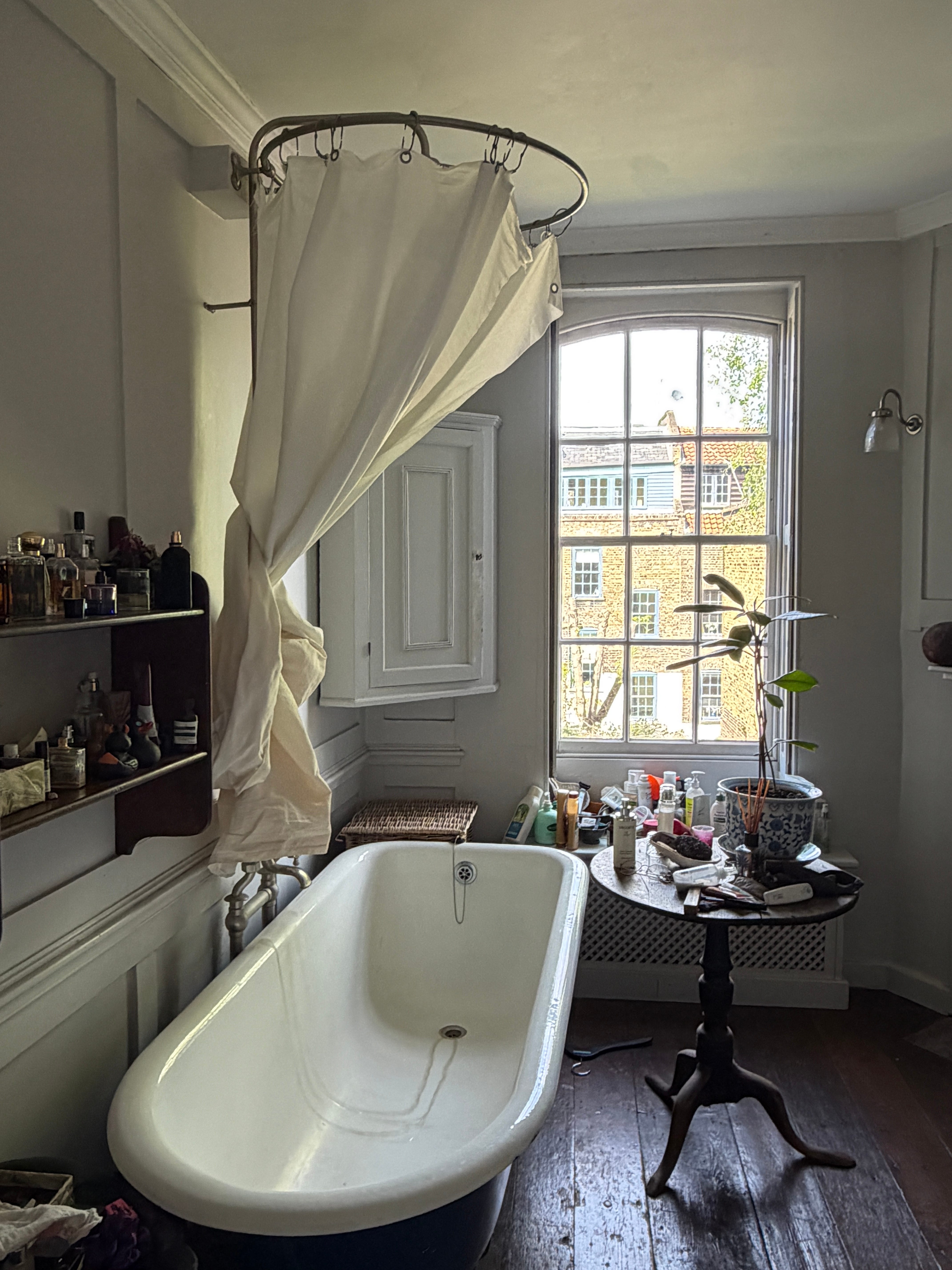
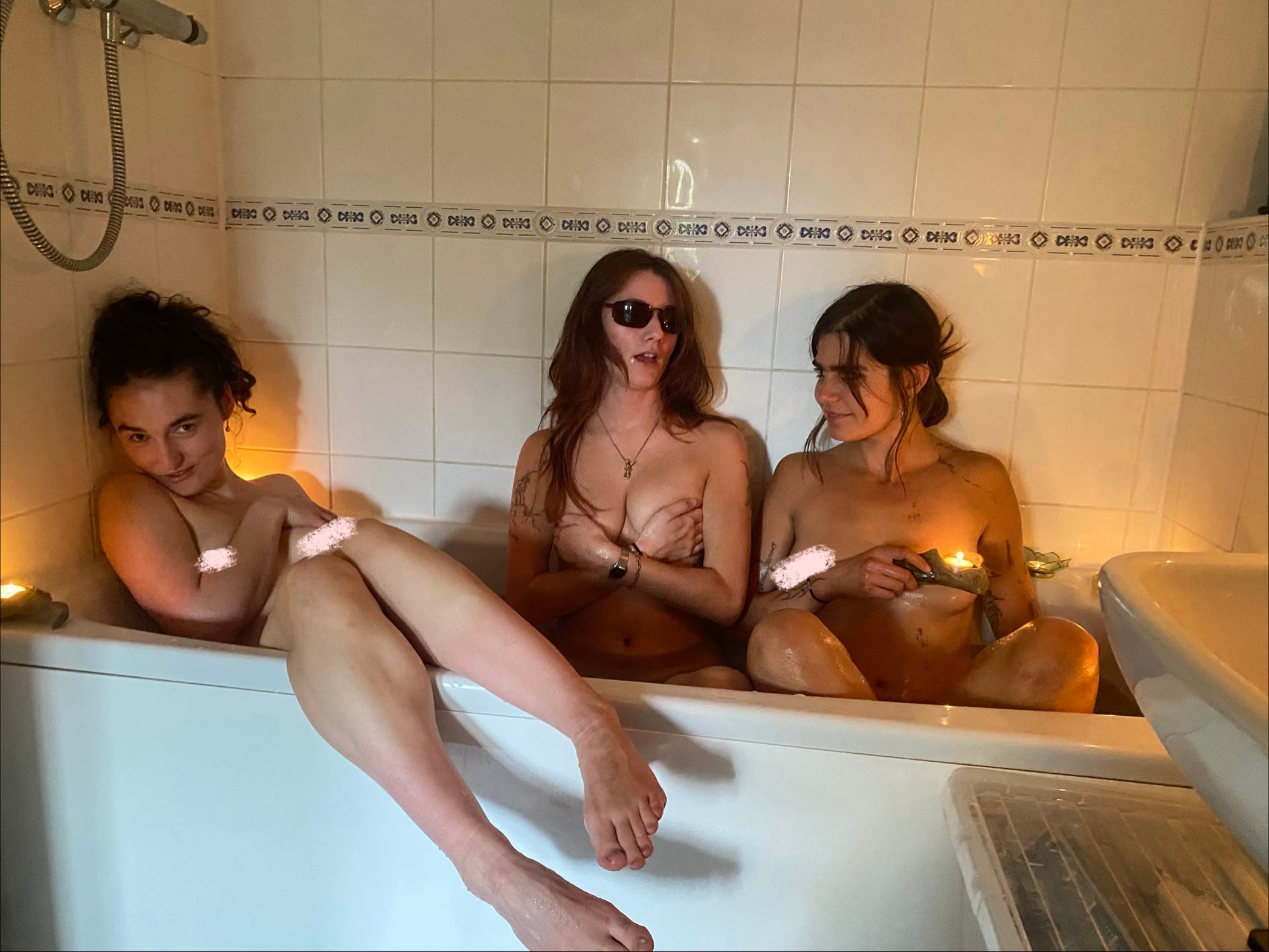
And I like seeing my friends. I love making my friends take baths with me; I think a lot of important conversations happen in the bath together.
Do you work with any practitioners, texts, or modalities on a regular basis?
Mostly books. I mainly read non-fiction, particularly essay collections and auto-theory, although there are works of fiction that I love too.
I have certain books that I return to again and again because they reliably make me feel something or bring me back to myself. I find a lot of meaning in writers such as Maggie Nelson, Jackie Wang, Annie Ernaux, Elena Ferrante, David Wojnarowicz, and Hélène Cixous.
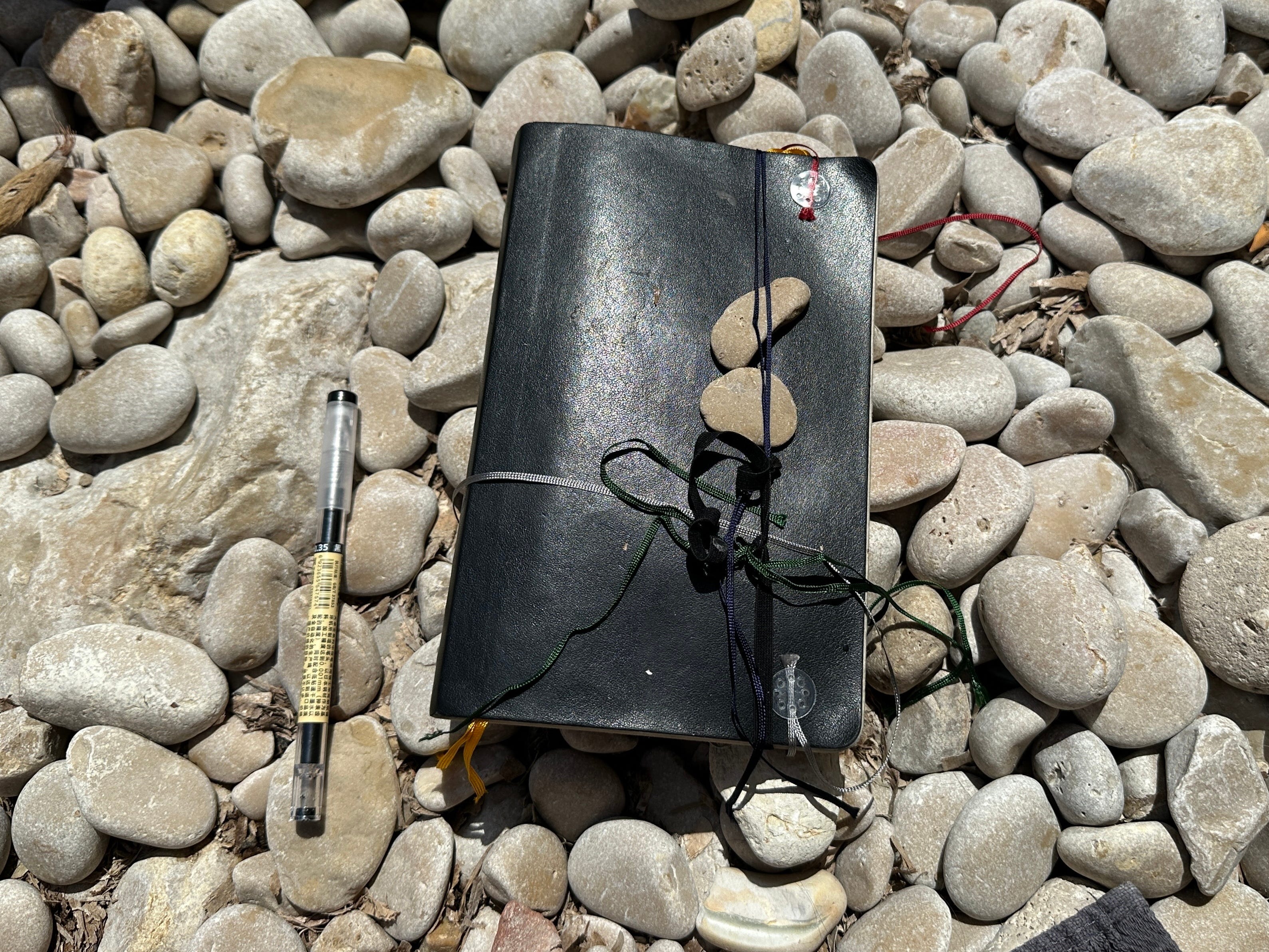
Also my own journal, and my favorite pen, I bring it with me everywhere. Truly everywhere...and it’s heavy! Even on nights out, I write whenever I feel like it, even if it's inconvenient. I love reading and writing while walking, it's my guilty pleasure.
Do you have a favorite meal?
I was brought up eating a lot of Italian food because my dad is Italian, and I think it will always feel comforting to me.
I have also found similarities between Italian and Japanese food, which is partly what drew me towards Japanese cooking. Both can prioritize delicate flavors and allow good ingredients to remain at the center of the meal.
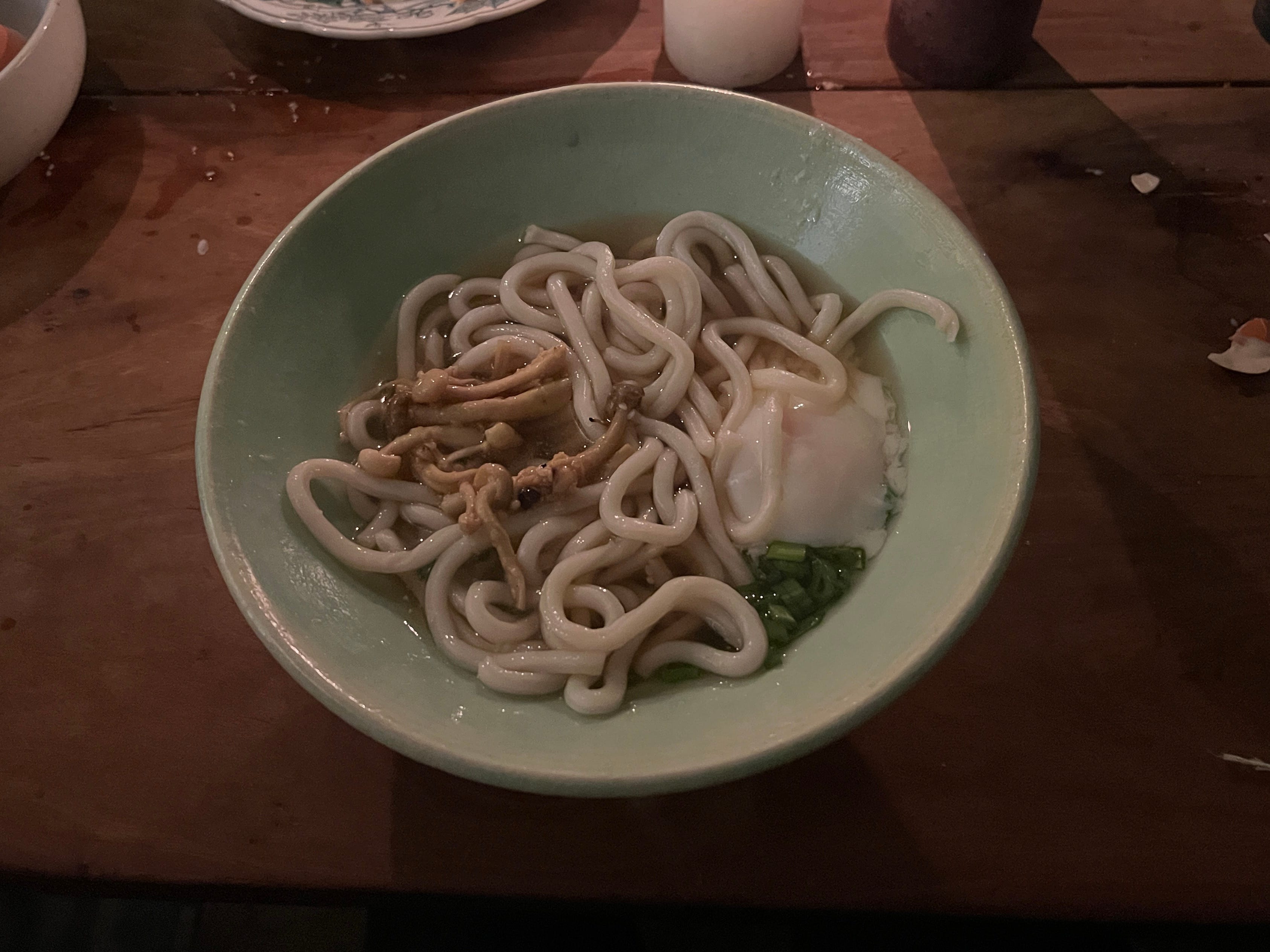
I am easily overstimulated, and I like to eat food that does not make me feel that way: things that are light, simple, and well-balanced. I cannot eat too much very rich or overwhelming food. I love sashimi, tartare, udon in broth, a good tomato pasta, and salads.
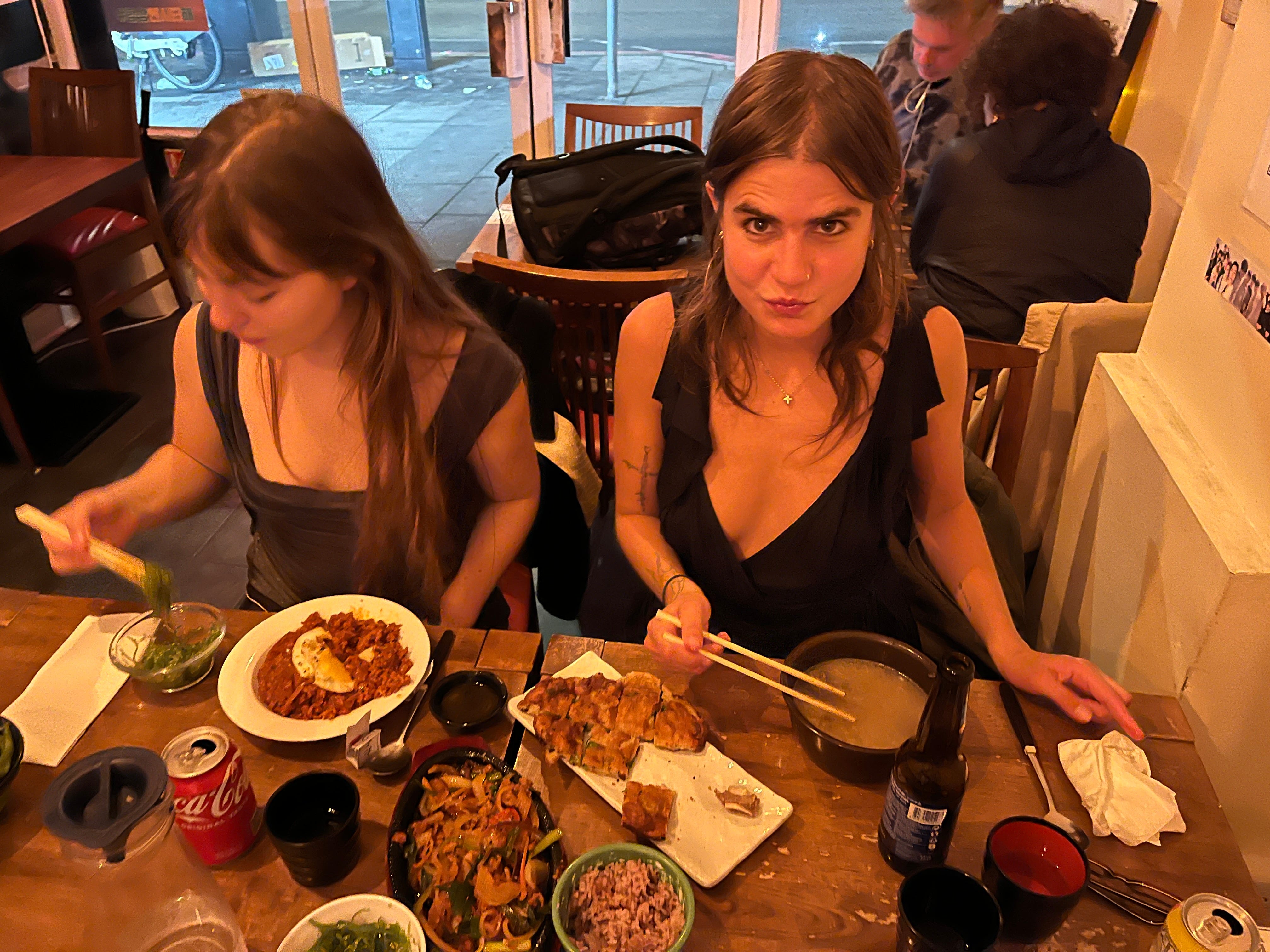
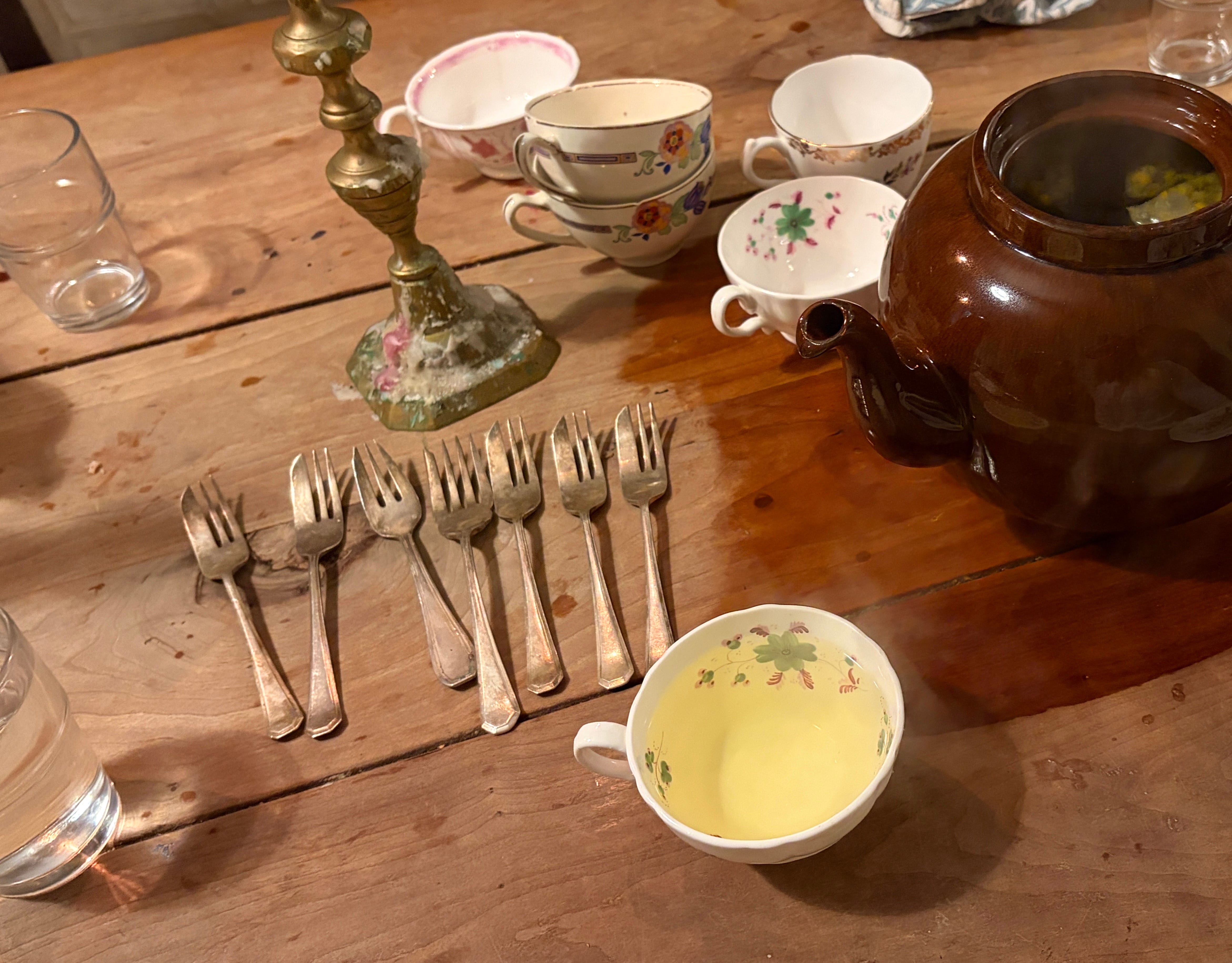
I love cooking for friends and hosting dinner parties. I want my friends to know that if they are ever in need, they can come to my house and have a cup of tea and a warm meal and a bath. Any meal eaten with friends is a favorite meal.
What advice would you give your younger self?
Keep being strange. Keep talking too much and having too many thoughts about everything. I did not have many friends at school, and I often felt like a weirdo, but I always had a rich inner world. I liked doing things alone and I always had loads of hobbies. I think enjoying doing things alone and having your own personal interests is so important, and I think those things draw people to you later in life. Now I am lucky enough to be surrounded by so many beautiful friends who appreciate me for exactly who I am. I am glad I did not try to minimize myself.
What advice would you give to the person reading this?
I think everyone should read more.
What would you like to see or create more of in the world?
I have just come back from Paris, and it made me realize how devoid of community many of our bars and restaurants can feel.
I think it is important to have local places where you are a regular, where the staff know you, and where you feel a sense of belonging. As someone who has worked in hospitality for a long time, I see it as a form of care work. Building those relationships feels important.
That can be difficult in a large city like London, where we have a different culture around going out to eat and drink. I like going to bars by myself and chatting to the bartenders. I have my regular places in London, and I try to get to know the people working there. I like to feel that I am being cared for, and that I am participating in that care in return.
Related reading:


 | A guest post by
|