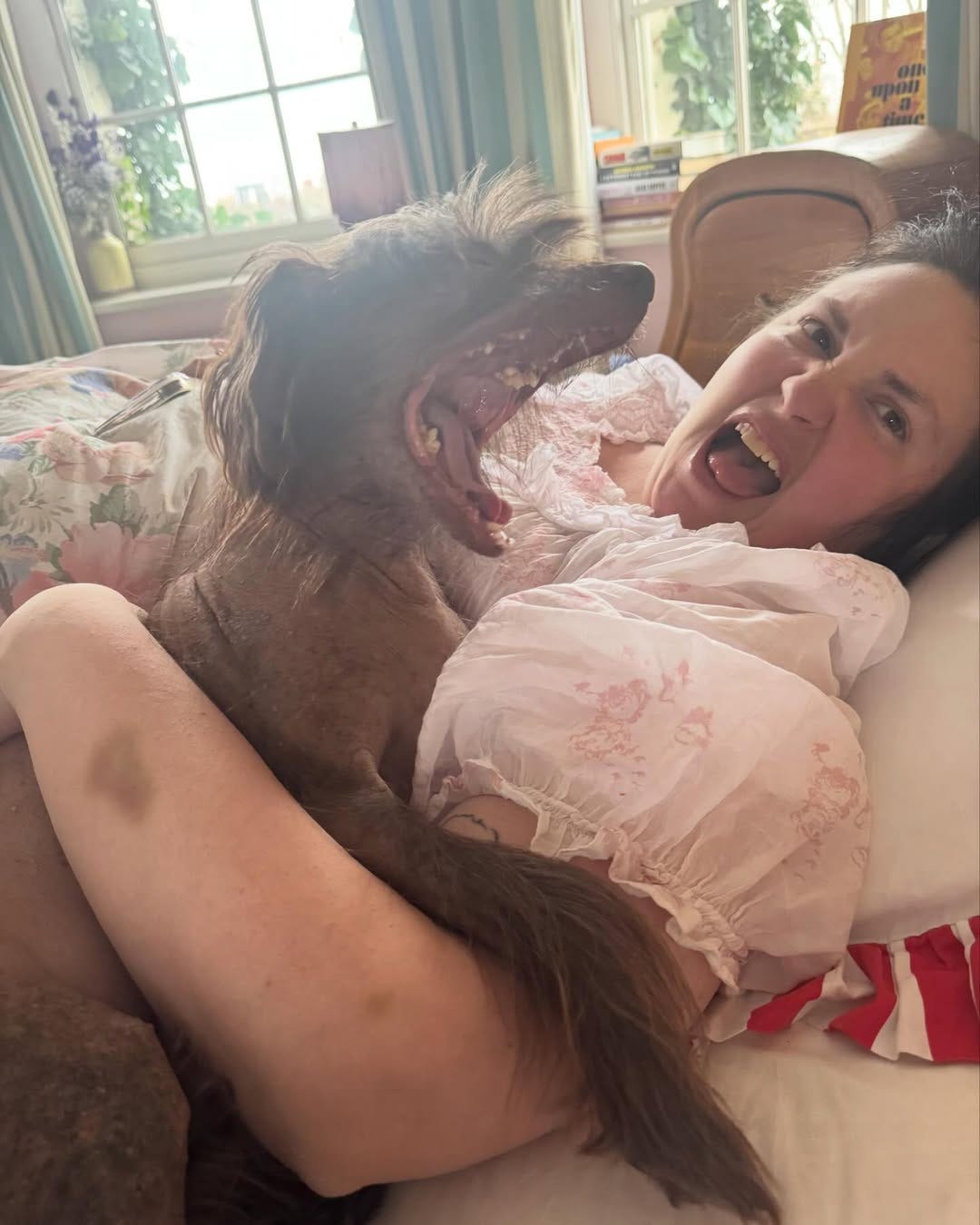
#96: Lena Dunham
"Pain, in its purest form, is a signal. We are all too used to pushing it down."
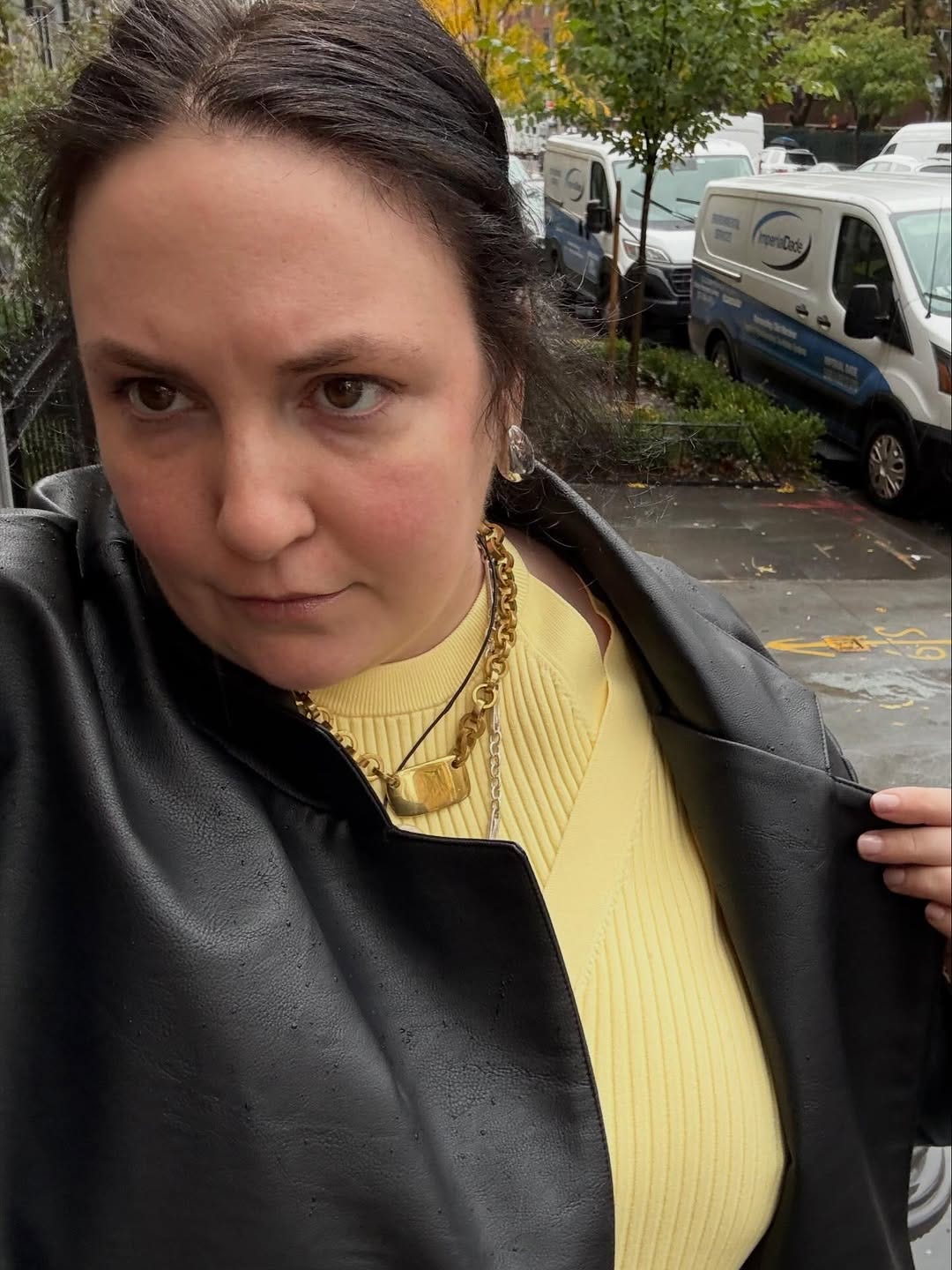
Today’s guest is the one and only Lena Dunham, the writer, actress, and director perhaps best known for HBO’s Girls (2012-2017). Critics-a-many have called her “the voice of her generation”; more recently, friend of the letter, Courtney, dubbed her the “patron saint of Substack.” Her second memoir, Famesick, is out this Tuesday.
#96: Lena Dunham
Taurus/Gemini/Cancer
North London + Northwest Connecticut
What does health, or being healthy, mean to you?
Growing up in the height of the diet-obsessed 90s and early 2000s — Snackwells cookie commercials on TV, my mother and her friends all drinking a confounding daily powder called Ultraclear, which tasted like a vanilla-infused crayon, speedwalking for their lives — I didn’t realize it, but I thought that being healthy meant being thin. I started eating Lean Cuisine with my grandmother when I was eight, and I wanted to have twig-like arms swimming in my thermal, delicate ankles sticking out of my Pumas. Soon, jeans got tighter and tank tops got smaller and puberty came and my body started to change, which coincided with a spike in profound, fight-or-flight anxiety and painful periods (which, I was told, were just a fact of female life, like deciding whether or not to get an underage belly button ring from the place that also made fake IDs, or having a man expose himself to you on the subway).
Looking back, I can put together the emergence of my chronic health conditions like a detective going into a fugue state of newspaper clippings and red string. But at the time, it felt like everyone else was moving around in a body that made sense, could do its job, and mine was always glitching.
Of course, now I know that everyone is having a unique experience of their physical body, informed by illness or trauma or projection or all of the above. But when my endometriosis diagnosis finally came, followed quickly by a diagnosis of Ehler-Danlos syndrome, post-orthostatic tachycardia syndrome (POTS), and mast cell activation syndrome (MCAS), it wasn’t that easy to find other people to connect with. I spent the whole summer of 2017 having phone conversations with women I met online who were intermittently or permanently bed-bound. At the time, I thought it was for a long-form article, but now I realize it was keeping me alive.
It’s very rare, I feel, for a woman’s specificities to be understood and tolerated.
The last decade has been about finding out what “healthy” means to me. In 2018, I got a tattoo that says SICK on the back of my neck — it was my way of answering the well-meaning question, “Are you better?” I wanted to define a space outside ideas of well and unwell, outside a linear concept of healing. I also liked the pun — “sick” is defined by Urban Dictionary as “an adjective similar to cool, referring to something that is either great or completely wrong.”
The first step to a more balanced notion of health was being honest with other people about my chronic conditions and the effect they have on my day-to-day life. It sounds so simple, but it was really hard to do because I was so afraid of being judged, discounted, or prevented from doing the job I love so much. It took a lot of trial and error and some embarrassing and painful experiences. I finally understood that if someone isn’t able to be empathetic about something simple like moving a plan, then I’m just not the right friend for them. If my collaborators can’t be a little bit flexible, there are plenty of people who will be able to fulfill their criteria, and I’m really lucky to have people who fulfill mine — even if I have to use my very elderly vibes scooter or even lean back on a massage table instead of using a director’s chair. I know a lot of chronically ill people don’t have the option to be supported in this way, and I am endlessly grateful.
This is a long way of saying that health, for me, is an evolving concept. My dearest friend Diet Poke is an incredible healer, and he always reminds me that we are never healed. If we stay conscious, we are always healing. The idea of the body as a fixed entity, one that stays encased in youthful amber, is a very Western, very capitalist notion.
Nothing has influenced my thinking more than disability theory. I remember when my brother was like, “You’re disabled. You are allowed to own that.” I was using a walker for a while, and yet it had literally never occurred to me not to treat it like a temporary humiliation. Disability looks a lot of different ways, and it can be incredibly joyful and freeing to honor your own needs and affirm others’. There will always be people who glare when you stand up out of your wheelchair at the airport, as if you’re trying to work the system, but there are also lots of people who are eager to help. It’s really humbling and cool, letting strangers help you.
I always say we are all headed in the same direction, and I just reached certain milestones (menopause, mobility aids) sooner than some other people my age. I would literally not trade the perspective it’s offered me for anything — not even my dream of doing a powerful gold medal figure skating routine to “Nothing Compares 2 U”!
How would you describe your current lifestyle?
I have two modes: Bed Mode and Beast Mode. Bed Mode is the place from which I read, write, dream, and hoard energy like a squirrel stuffing its cheeks with nuts. I get a lot done in bed mode, but you wouldn’t know it to look at me — laid out in my If Only If nightgown. If I’m in London, my Lumie sunlamp is on full blast, and if I’m in Connecticut, I go outside more because the pigs need to be fed.
Bed Mode is where scripts and books are written, a lot of meetings are taken, and I also indulge my inner 12-year-old by taking breaks to enter Google k-holes and read poetry (currently remembering my love for that horny madwoman, Edna St. Vincent Millay).
Beast Mode activates when I am on set, doing press, or on a book tour. A force of will takes over that, most often, overrides almost any physical challenge I might be experiencing. I love this part of my job because it’s communal and often very silly, and I care so much about the people I work with. But I know there is a cost to Beast Mode, and on the other side, I could end up pretty flattened for a matter of days or weeks.
It’s the mix of the two that makes everything possible, as well as the support of my closest collaborators — my business partner, Michael, and my husband. My family has been so ride-or-die, which I know is technically their job, but let’s be real: not everyone does it!!! It’s very rare, I feel, for a woman’s specificities to be understood and tolerated. I used to imagine some ideal version of me, rising at 5am to dry brush, hurl myself onto a trampoline, and brew my own adaptogenic tea to pour into a personalized Yeti mug with a fun color story. But I’m going to be 40 in May (!) and the idea that there’s a better or different me lying in wait is really starting to seem absurd.
I can handle almost anything if I know my bed is on the other side.
It’s important to me to accept the people that I love in the same way that they accept me. Whether it’s as a friend, sister, daughter, wife, or even boss — I am really careful to never make comments that come from a place of “concern” but are actually veiled critiques of how someone else chooses to survive. When you have health issues, especially in LA, everyone has a supplement, a healer, a doctor, a trick — and even if it’s well-intended, it can really make you feel like a sad slob. Unless someone I love is actively hurting themself or another person, I want them to feel embraced in their current form.
How do you start and end your days?
Again, depends on Bed Mode or Beast Mode…
Bed Mode
5:10am: Our dog, Ingrid, wakes Lu up and demands food on behalf of the entire brood. He’s a morning king. I am a nighttime angel.
9:30am-11am: Sometime in this window, I sit up in bed with a start, try not to immediately check my phone, kiss whoever’s fuzzy face is closest, and drink a huge matcha (no milk!). I have been doing transcendental meditation since I was 9, so I do that or listen to a self-compassion meditation. I love going right from sleep/meditation to writing. I feel like there is some puncturing of the veil between conscious and unconscious thought that’s often very useful.
Around noon, Lu makes us eggs and soldiers (primary reason to marry a British person, above even the accent).
Once it’s time to focus outward, I wipe my face with a washcloth, take my medication, brush my teeth, and smear on whatever face cream I have received for free that doesn’t give me hives. I use a wooden face massage tool from Wax Apple — it’s such a gorgeous object that I got my father one just to keep on his desk. If I have an important meeting, I lay my outfit out the night before so that I won’t be tempted to slip into my torn red sweats. Sometimes I scrap the look and wear them anyway.
Beast Mode
Shooting days often involve waking up while it’s still dark out. I sleep until the last possible moment, then condense a routine that should take 45 minutes into five. I’ve had the same drivers on set in London and New York for a very long time — Bryan and Daz, two of the most important relationships in my life. I treat their cars like moving studio apartments: alternate outerwear, gummy probiotics, nine kinds of obscure beverages (Ito En green tea! Kefir water! Actual kefir! A low-key kombucha! A high-key kombucha!). Some mornings, I will nap a bit en route; others, we listen to T Swift and dance in our seats. I ask if they’ve heard any crew gossip because no one tells me anything.
When I land, I grab my script and my sharpie, make sure that everyone has what they need, and then eat an egg white, spinach, and feta wrap (a perfect amount of everything) while I wait for them to set up the first shot.
The one time I lose all semblance of routine is when I travel. Suddenly, I’m eating a regional potato chip flavor at 6am and then sleeping until 3pm, waking in a state of manic guilt. My mother and brother are amazing travelers — you can drop them anywhere and they develop a full lifestyle. My brother will literally make a friend in the streets because they have the same sneakers, who turns out to be, like, a Proust scholar and a club promoter. I caught my father’s homebody gene. I can handle almost anything if I know my bed is on the other side.
My mother and brother are amazing travelers — you can drop them anywhere and they develop a full lifestyle.
My bed. The most wonderful place in the world. In both London and Connecticut, it’s a California King with a custom-tufted headboard, soft fringed lamps, and neon gingham sheets from Piglet in Bed. I won’t lie, babe, I’ve got stuffed animals in addition to my real ones — a pastel llama named Juancito who Lu brought back from the Lima airport, a teddy bear named Babydaddy, a bunny named Bunny. Within arm’s reach at any given time are: 13-17 books, all my medication (organized using a tortoise pill caddy from Chronically Chic), and my iPhone so I can relax by listening to a terrifying crime podcast like a normal person. I read an interview with Susan Orlean in which she very calmly confessed to the same habit, and she recommended Ozlo sleep headphones, which are amazing — they make all kinds of white, brown, pink, and red noise. But nothing feels as good as passing out with old school wired iPod headphones in, waking up in a tangle of cord, your alarm going off without your knowledge for over an hour.1
Can you recall a moment when you became more aware of your health, or your relationship to it changed?
This is such an obvious answer, but it’s sort of the only answer: when I got sober. I was never a drinker or a pot smoker. I tried coke one time and could barely get it up my nose. MDMA made me sweat profusely from one armpit and beg my college boyfriend not to leave me. But because of a lot of surgery in my late twenties, coupled with a work schedule that was pretty unrelenting, I had become dependent on pharmaceuticals to be able to stay a part of the world.
Not sure who said “drugs work really well until they don’t,” but they nailed it: soon you find the thing that was keeping you in the world is actually walling you off from it, the thing quelling your pain and anxiety is causing more. I was so ashamed when I landed up in rehab (a big chunk of my new book, Famesick, focuses on this time), but by day ten, I was acting like it was summer camp. The opportunity to come together with other suffering people in a calm, structured way is a gift. The rehab industry is massive and full of bad apples, but I was lucky to end up somewhere really special. During that time, I started listening to the messages my body had tried to pass on politely, but had been forced to scream at me because I had earplugs in.
When my anxiety began in my teens, along with chronic pain, my mother was trying to calm me about taking SSRIs and said, “If there’s medicine to fix it, there is no reason that you should ever be in pain.” That was a really loving and generous thing for her to say, but I took it too far. Pain, in its purest form, is a signal. We are all too used to pushing it down and ignoring it. Now, I let my body tell me what it needs, and I don’t immediately panic when it sends up a smoke signal.
I wish so much that the American medical system made room for people with dual diagnoses — be it mental health conditions, eating disorders, substance misuse issues, trauma, and/or chronic health conditions— to come in for a safe landing, but that is another chat. It’s probably the thing that makes me angriest, the way that the medical system is set up to doubt and deny. I have had the gift of some amazing doctors who really listen and are open to learning, but for every one of those, I’ve seen ten who condescend, control, and project. And I’m lucky to have even had the ability to see those other ten!
What’s your relationship to self-healing?
Despite all of my awareness around my health, it can still be hard for me to ask for help or to notice a symptom until it’s pretty far gone. Part of this is some internalized ableism I’m still shaking out, and part of it is that I’m often quite bored with having a body.
Last year, I read The Body is a Doorway by Sophie Strand, a beautiful writer with EDS. Hearing her verbalize the way that chronic pain has led her to override her own signals was so moving. The best writing reflects an experience that was previously isolating.
The biggest game changer, in terms of day-to-day life, was finding a doctor who was literate in my various conditions and how they interact, so that I was no longer being divided into parts. She listens, and she affirms. She had me start taking some daily antihistamines and mast cell stabilizers, wear compression socks, drink a very salty electrolyte mix, and use this thing called a Visible band, which is an amazing tool created for people with energy-limiting conditions. It’s the first band to monitor your vitals that isn’t geared toward step count, etc, but toward preserving your spoons. Shout out spoon theory — IYKYK.
Do you work with any practitioners, texts, or modalities on a regular basis?
I’m gonna be real: there is basically no week I don’t see a doctor. GP, cardiologist, OBGYN nurse practitioner, endocrinologist, dermatologist, osteopath. If you were to search “Dr” in my phone, I would feel deeply exposed. I have a patient advocate/nurse manager who helps me organize my various appointments. One of the things people don’t realize about chronic health issues is that it’s a full-time job — paperwork, insurance, booking appointments, and managing prescriptions. It’s one of the reasons caregivers need a lot of support. Living in the UK has been an eye-opener, seeing how they’re slower to medicate and also more holistic in their recommendations (plus, the NHS will never stop impressing me!).
On the emotional front, I have a wonderful psychiatrist I see on Zoom every Tuesday who specializes in helping women who have experienced profound burnout. Couples therapist, because it’s hard to get an Englishman to say what he’s feeling, and it’s hard to get a girl from New York to stop.
Almost everyone I see is a woman, with a few notable exceptions. I’ve found the feeling of safety that that creates to be pretty radical. I know I’ve said it before, but I spent so long looking for this tribe, and it’s not something I ever take for granted (and I LOVE taking things for granted!).
When it comes to indulgence, I don’t have time to add much to the menu, but my absolute favorite treat is this ASMR massage.
I found out that this was a thing from TikTok (where else!). It’s literally paying a nice woman to brush your hair, scratch your back with various tools, whisper affirming things, and click her nails together. I was always the girl at the sleepover who wished the back tickling train would never end, who did “x Mark’s the spot” on someone’s back purely so they’d return the favor.
I.
Love.
Shivers.
And I’m an adult now, so I can pay someone to do this for whom it is an abiding passion!2
Do you have a spiritual practice?
My brother is a Buddhist — he’s been studying to become a chaplain, and his spiritual life really lights me up.
My cousin Carleen is a super progressive minister in Old Lyme, Connecticut and so does hers!
My father has been on a lifelong psychedelic journey, whereas my mother is into psychics.
Joseph, the nurse who gives my IVs when I’m struggling with a flare-up, is a Bukharian Jew who has basically given me the Hebrew school education I missed out on when I quit abruptly because I didn’t like my role in the Purim Pageant.
Engaging with people who have dense spiritual lives — whether they’re of a specific denomination or just digging into past life possibilities — is a consistent source of pleasure and inspiration.
When do you feel the most nourished?
When I’ve had a really full day on set and I get home and my husband pulls my boots off and makes gnocchi with mushrooms and crispy kale.
When I am with my nuclear family in front of the fire at the home we’ve all built together, all reading and drinking tea.
When I’m watching my rescue pigs chow down on a massive meal and then they flop over to be rubbed, and I remember how afraid they were when they first came to live with us.
Lying on bed with an old friend, eating Bjorn corn and drinking compelling seltzers as they download me on everything they’ve been thinking and doing.
How do you reset?
There’s the answer that I want to give: meditation.
Then there’s the answer that is the truth: reading celebrity gossip (I like the neutral kind, like Dua Lipa’s vacation pics and jewelry closeups, not the invasive life-ruining kind — important distinction!).
Every Sunday, I do a reset “ritual.” First, I read all the long-form articles I’ve saved throughout the week. Then I respond to, tag, and archive my email, trying to get to inbox…below 100. I look over my weekly schedule to try to diagnose what feels doable and what feels like wishful thinking. I move my various open tabs into groups (SHOPPIN’, RESEARCHIN’, CRAZY SHIT) and organize my laptop, pulling projects in motion onto my desktop and placing things that are complete or in stasis into folders. I change my background image to something I’m currently obsessed with, like 1970s ingenue Season Hubley or Agnes b.’s apartment in Paris.
This brings me a profound amount of peace. I would pay (almost) anyone to let me organize their desktop.
Do you have a favorite meal?
Yogurt. I love plain yogurt. With maple syrup. With pineapple. With green grapes. Whenever I go and stay with a friend and they ask me what I’d like to have in the fridge, I say, “I’ll be fine with yogurt!”
I made a little pandemic movie called Sharp Stick and a defining trait of the lead character is that she only eats yogurt, and several Letterboxd reviews were like, “What’s with the fucking yogurt?”
What advice would you give to your younger self?
It sounds so basic, but be kind to yourself, little lady. I spent so much time I will never, ever get back berating this tender, sensitive, and hopeful young person just for being herself. Yes, when we make mistakes, we have to be accountable. Yes, we need to push ourselves to grow as people and artists. But I was crueler to myself than anyone else could have been, and in a way that’s the biggest betrayal of all!
What advice would you give to the person reading this?
Health is a very personal, very specific thing — only you know what it means to you, what your priorities are, what makes it possible for you to walk this earth with dignity and some measure of peace. Ask for help when you need it, value your body because it’s the whip you’re riding in this lifetime, but don’t let other people’s metrics overtake your own values and needs.
What would you like to see or create more of in the world?
See: a universal healthcare system that sees people as inherently worthy, that views healthcare as a right and not a privilege.
Create: Okay, bear with me — it’s like Citi bikes, but for ambulatory wheelchair users. Electric seated scooters/wheelchairs (with big baskets for groceries, etc) that can be picked up and returned with ease, so that — if someone has a pain flare, has over-exerted themselves, or their mobility device has failed them — they can rely on a free, easy, and independent way home.
The Miami airport has something like this, and I was really excited, but the wheelchairs are self-driving and mine chose to tail a guy in Louis Vuitton patterned separates 100% against my will.
Lena’s Health + Beauty Essentials
Adapt Naturals Bio-Avail Grass Fed Bovine Colostrum Powder for Gut Health, Immune Support & Vitality
The stressfully named Cult CEO Glow from Sunday Riley — as they say in the UK, it does what it says on the tin!
Tower 28 SOS daily spray — if you’ve got moody skin, random rosacea or sun sensitivity this is the shit.
L’Oreal Paris Lumi Glotion mixed with Summer Fridays Heavenly Sixteen face oil for that slick donut look (that may be going out of style?).
Nothing looks better on more people than Clinique Black Honey — like Chanel Vamp nail polish or Nars The Multiple in Orgasm, it’s a classic for a reason. When Sephora opened on my block in Soho in 1998, this is what I was after, and nothing has changed.
If I have eyebrows, I might as well be in an Iron Man suit, that’s how powerful I feel. I’ve tried virtually every liquid brow, and the mix is Kosas Airbrow (for pigment) and Ere Perez Argan Brow Hero (for volume).
Altra Profuture are the most light natural perfumes. Even scents I love can trigger my migraines, and these are the only perfumes that never have.
Recently, I used the one conditioner my eight-year-old friend will accept and I’m never going back.
Related reading:
Btw, I wouldn’t give this much detail except I literally live to read it from other people. When I was in rehab, I read a book called Daily Rituals: How Artists Work over and over for comfort. Honestly, it wasn’t even about how they worked — it just revealed key info, like the fact that Georgia O’Keeffe ate a huge bowl of beef chili for breakfast every single day!!!
If you are not able to locate someone near you or it’s not in the budget, here are some of my favorite internet ASMRtists:
Here’s Phoebe Bridgers getting an amazing energy bath of sorts.
Heather Feather, a bit of an icon in the ASMR community, giving YOU a head and scalp massage. (Apparently, she has since retired and there’s a lot of speculation about her absence from the space — but I choose to focus on her contributions to the medium.)
And Soft Touch ASMR, a spa in LA — this was my gateway drug.


Loved this one. Incredible read! Thank you
Obsessed. Made me want to organize my laptop, which I normally avoid at all costs. Lena, you deserve the world—congrats on all this hard-won wisdom. Wishing you lots of energy to promote Famesick.