

In Prayer with Peggy Kelley
“When Peggy prays, the words pour out of her, coating everyone like a balm.”

Welcome to In Prayer, a new series by artist and writer Lola Jamin. In each installment, we’ll explore the mechanics of prayer through conversations with those who have uniquely developed practices. The aim is to expand our understanding of what prayer is and can be, so we might realize our own paths forward into deeper connection with ourselves and the world around us.
IN PRAYER WITH PEGGY KELLEY
“I go to a place where the Holy Spirit is so thick in the room that I couldn’t tell you my name.”
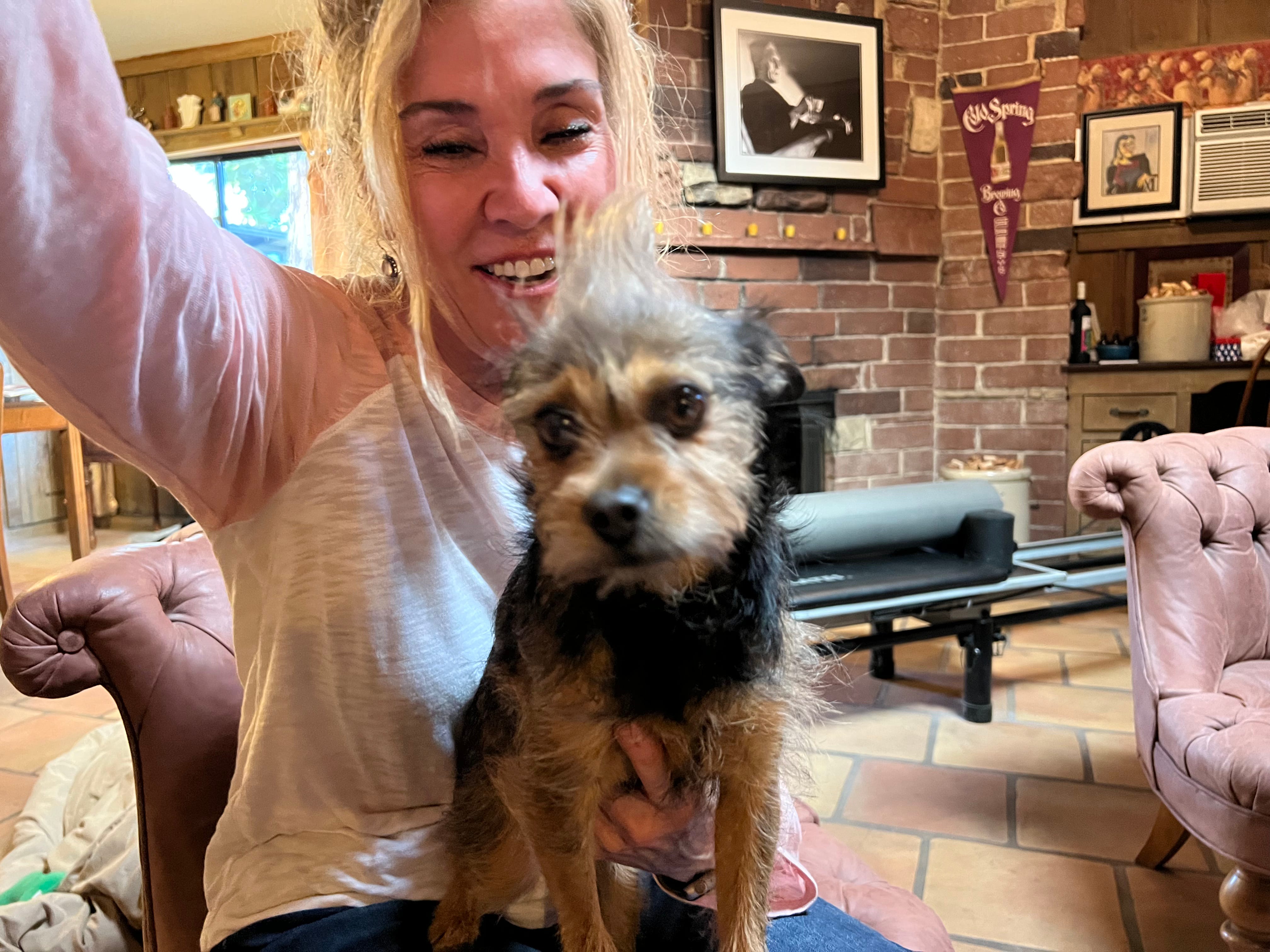
My mom met Peggy Kelley, lead Christian Chaplain at Cedars Sinai, in the early 90s, when both were actresses in Los Angeles. I’ve known Peggy since I was born, and she has become one of my dearest teachers.
Peggy works with patients of all faiths, or of no particular faith at all, often in the midst of immense transformations: sickness, death, or birth. She provides Reiki, blessings, spiritual counseling, and prayer.
This past Spring, Peggy attuned me to Reiki, and soon I will practice at the hospital she works at. During training, I shadowed Peggy on the ICU, post-op, and NICU floors. When Peggy prays, the words pour out of her, coating everyone like a balm.
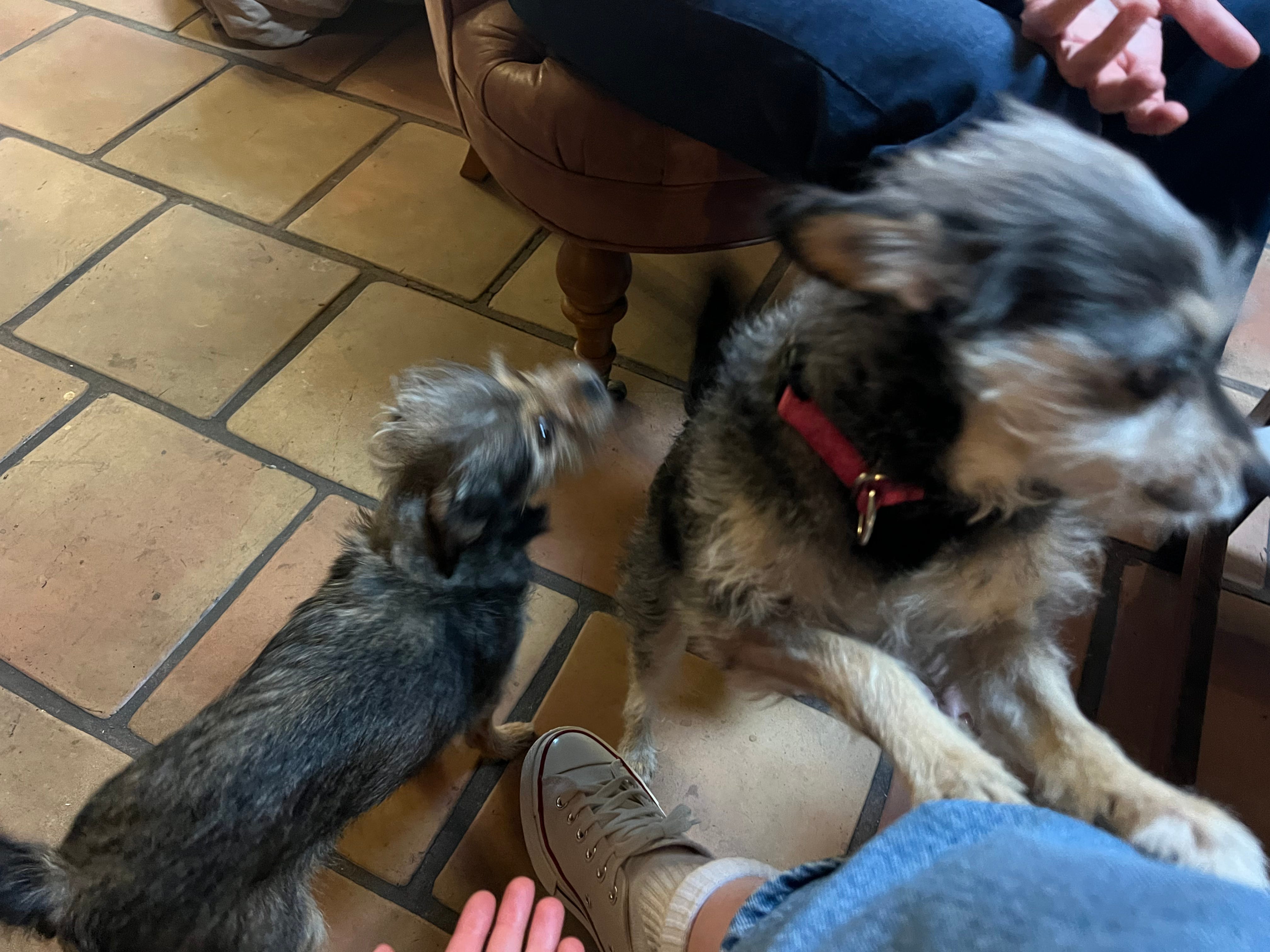
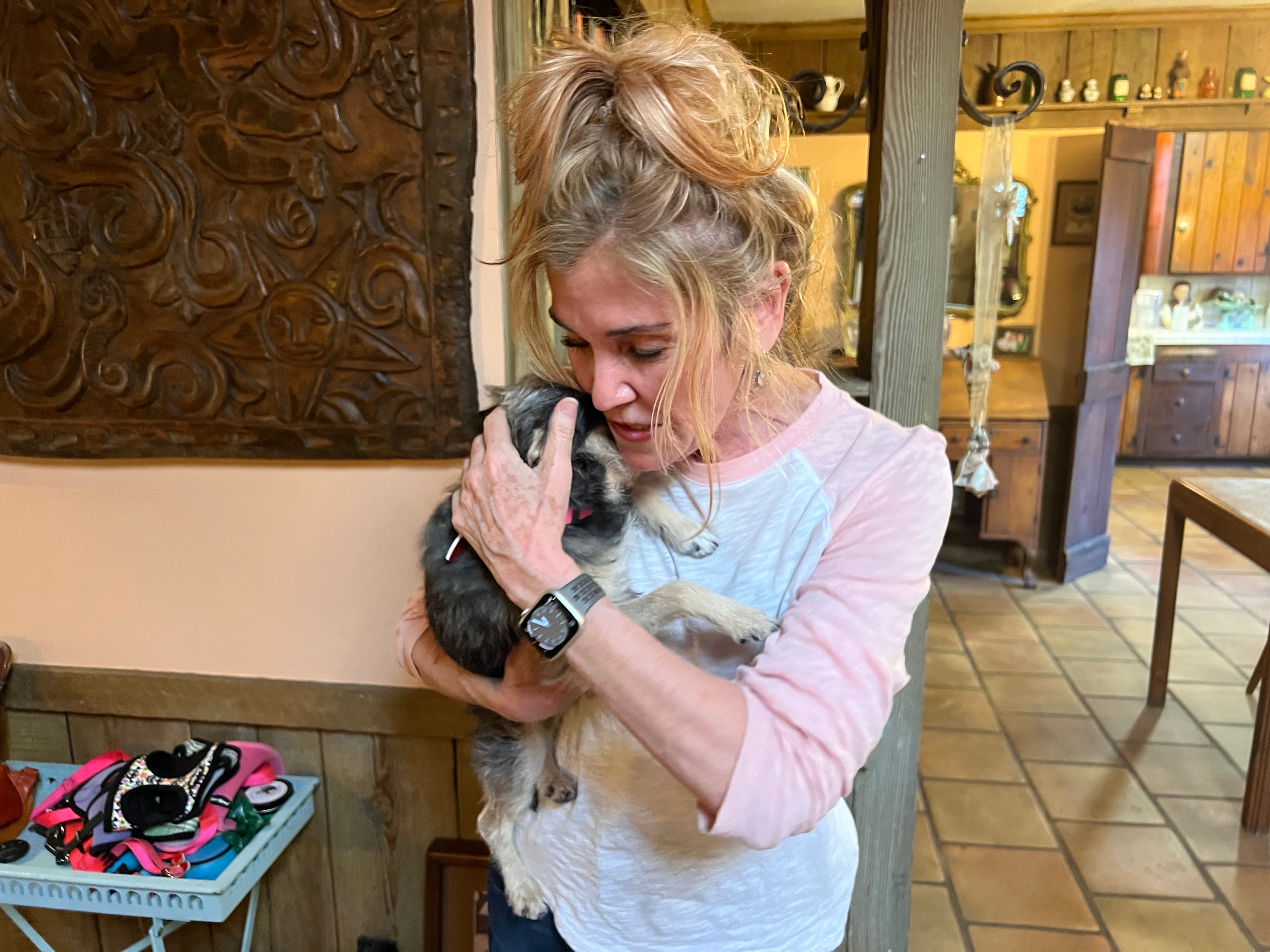
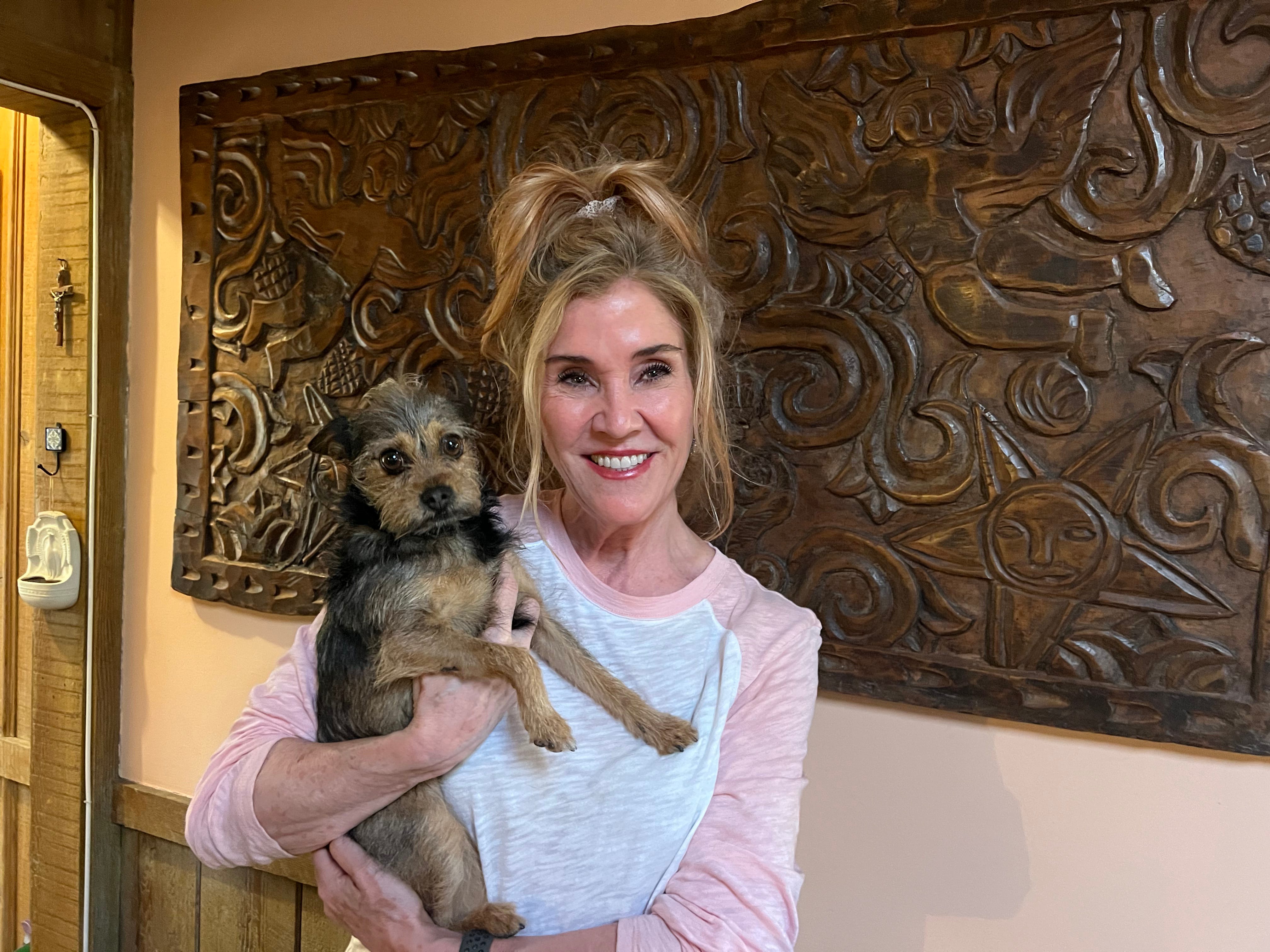
For our conversation, I meet Peggy at her home in Burbank, California. Inside, I am greeted by Peggy’s two small dogs, Mother Theresa and Hildegard. As we talk in her living room, her cat, Socrates, lays at our feet.
There is so much heart in Peggy’s practice, shaped by the grief she’s shared in and the miracles she’s witnessed. I’m excited to share her approach with you.

Lola Jamin: I’m curious about your journey towards spiritual healing. What brought you there?
Peggy Kelley: I came to Los Angeles to be an actress and I wanted to make sure that I kept my toes in my faith. I was raised Catholic, so I started teaching Sunday school at St. Monica’s. I was teaching six to seven year olds when 9/11 happened, and that changed my path. Some of those kids were in really intense existential crises. They had big questions. “God’s supposed to be good. Why did this happen?” That made me realize I wanted to do something else.
That’s when I started the journey to become a chaplain. It was a huge endeavor: all this training, a Masters of Divinity, and certification. I ended up at UCLA for my first unit of training, and then Children’s Hospital.
At what point did you learn Reiki?
After clinical training, I was pushing back on getting the Masters of Divinity, because I was a bad student. I was terrified. When I was working for Disney doing comedy on cruise ships, I met sisters Anne Marie and Teresa. They would rescue me when the cruise would dock. They’d drive me to their house, and I could put my feet in the grass, and we’d pray.
When I knew I had to get my M.Div., Anne Marie and Theresa said, “You’ve got to go to St. John’s.” It’s one of the toughest seminaries. They petitioned the dean and they grandfathered me in with no bachelor’s degree. It was so scary. I was having panic attacks.
This fabulous nun, Mary Rachel, said, “Honey, I heard you’re having trouble. I’m going to help you.” She did Reiki on me, then said, “I’m going to teach you and you’re going to get done with this degree.” I learned Reiki over a weekend in the basement of a monastery in Minnesota.
Among some devout Christians, there’s a view of spiritual practices like Reiki being incompatible with a Christian faith. But you learned Reiki from nuns. What do you make of that?
The Benedictine tradition is super mystical. Historically, Christianity is super mystical. It’s the Holy Spirit — a spirit that lives within you that you’re supposed to feel and communicate with.
I knew there were some in the community that were like, “This is not cool with us.” Which is ironic, because the laying on of hands is such a Christian thing to do. Jesus did it all the time. Nurses and healers have used their hands. Sister Mary Rachel told me, “Honey, this is the Holy Spirit. Don’t be afraid of it.” So I used Reiki and prayer a lot in school.
What does prayer mean to you? How would you define the act of praying?
Ultimately, it’s just talking to God. Whatever’s on your heart, it’s coming up.
There are prayers that are lamenting, really deep, painful moments of people crying out. That kind of screaming, lamenting anger — that’s prayer.
Often when I’m with patients who are really sick, they’ll say, “I’m so glad you came, because I feel like I can’t pray.” I often say to them, “I think your life is prayer right now. You’re moving through this insanely difficult time; every minute of your day is prayer.”
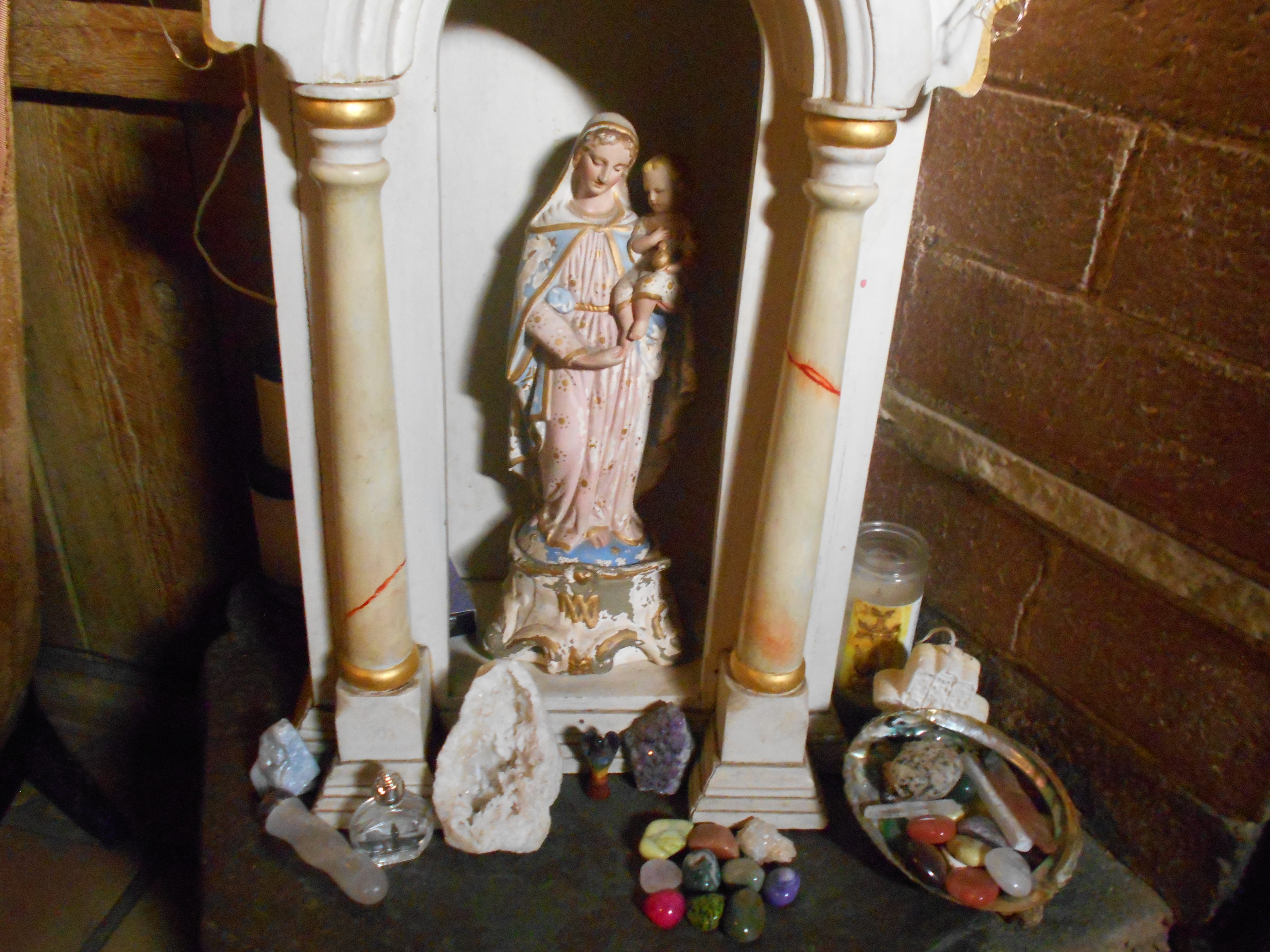
There can also be moments when you feel an incredible wash of grace or beauty. In the Catholic world, it’s very sensory. The five senses are enacted to bring you to God. Even the stained glass windows; people looked at those to find God.
When you pray for people, how do you find the words?
I really want to honor what their tradition is. I feel like I’m this conduit. I’m taking your story and creating it into this narrative that we’re going to lift up to God together.
I’ve had experiences where patients say, “Thank you, God, for giving me cancer, because now I understand something I never did before.” That’s their prayer with me. We say, “Thank you for giving this incredible challenge, so this person could come to this place where she knows you.” Or you’re brought to your knees. There are times when I pray at night where I do get on my knees.
If there’s an intention to it, there can be a sacredness to it. They’ve done MRIs on nuns when they’re praying; you can get into a different place within your brain.
What is it about getting on your knees?
It’s humility. It’s not comfortable. My grandparents, in their 90s, would get on their knees on their carpeted living room floor watching mass on television. It’s recognizing everything’s so much bigger than you.
But you can pray anywhere. You can be in your car. Sometimes, when I hear a siren, I do a little sign of the cross. It’s such a part of my life, I don’t have a day without it.
What do you believe are the necessary components that make a prayer a prayer, rather than a recitation, or a meditation, or making a wish?
If there’s an intention to it, there can be a sacredness to it. They’ve done MRIs on nuns when they’re praying; you can get into a different place within your brain. And you feel the Holy Spirit so strongly. I’ve had that in patient rooms; when I walk into the room where the person’s been praying, it’s almost like a remnant of the prayer is still in the room. I call it the “hairy toe moment” — as in, Jesus’s sandal is there; he’s standing in the room with me.
One time, you told me the prayer, “Show me you’re here, please remind me that you’re near.” It’s so simple. I didn’t even know I could ask for that.
And then eventually you’ll come to a point where you’re like, “Oh, I know you’re here. I need you to stay close today. Walk with me.”
What do you think is the outcome or the effect that praying has?
It does go somewhere. Sometimes I just say “I love you” to God. When you say “I love you” to someone, it feels good. Why wouldn’t it feel good to God?
People get mad at “thoughts and prayers,” especially in the world we’re in now. I think thoughts and prayers do matter. Prayer is active. You’re showing up. It goes somewhere, because it’s intention, and the intention has action to it.
When you pray with others in vulnerable moments, what does it feel like to you?
I really get away from myself. I get out of my way. I say, “Lord, use me, and then stay in the room when I leave.” I’ve had these wonderful moments with brand new babies. The parents are in a state of awe. I say, “Remind them who they are. Be that third parent in the home.” It’s this cycle of calling in the blessing.
The same process is in death; I see it as a new birth. I’ve been called into rooms where a patient is actively dying and no one else is there. What a gift, to be in this space to walk someone home, telling them, “You’re safe, God’s in the room.” I say, “There’s nothing to be afraid of. You can step over.”
It feels very pure, very honest. Sometimes I don’t know who I am. I go to a place where the Holy Spirit is so thick in the room that I couldn’t tell you my name. You are touching the hem of God. You are getting a little taste of what the next world is.
We want to understand everything. We don’t want mystery. But I think that’s where you have to step into prayer and say, “I’m going to do it anyway.”
And when you pray with people of different faiths, what has that taught you about what prayer actually is?
Last week, I was with a Muslim couple and their son who is critically ill. She was calling out to Allah. I said, “It’s the God of all people that we’re talking to.” And she said, “Yes, it’s the God of all people. Pray, pray, pray.” We were praying over her son; she was praying in Arabic and I was praying in English. It’s a profound experience to be welcomed into that realm.
Do any moments come to mind about the power prayer has?
In 2008, Sister Theresa got diagnosed with breast cancer. The Benedictines are the oldest order of monasticism, and they’re all over the world. They put out an email to all the communities and said, “Could everybody pray at this one hour?” There were thousands of sisters around the world praying all at the same time.
Theresa came out of surgery and went back to the monastery. She goes, “Peg, they couldn’t find it. It’s gone.” I said, “What?” The surgeon said he couldn’t find it, and it never came back. The nuns walking around just said, “The power of prayer!” It was that matter of fact. It wasn’t even like, “Oh, that’s so mystical.” It was just: that’s what happens all the time.
It is easy to hear that and think that if we could just pray hard enough, maybe the sickness could go away. How do you reconcile an experience like that with what you see at work?
I don’t think you can. There are miracles that are super obvious. Truly mystical, miracle-believing women like the nuns don’t really bat an eye at it. I’ve seen crazy things happen in the hospital where I’m like, “What do you mean that patient’s alive?”
But this is what’s really hard for people. That’s the big wrestle with faith. In the Catholic tradition, it’s God’s will, not ours. We can pray and petition, but it doesn’t mean it’s going to come the way we wanted it. I think every prayer is heard, but the answering of it isn’t always exactly the way we ordered it.
There are a lot of mysterious things with faith. The miracle, to me, is that God’s with you no matter what. I always have the Holy Spirit with me. There’s a buzz that never goes away.
There can be times when it’s really dark and you can’t see it. When a patient is about to die and the doctors have determined further medicine is futile, the family will say, “We’re praying for a miracle.” I’ll say, “You can’t get in the way of a miracle. If a miracle is coming, it’s coming, no matter what you do.”
I do struggle with the very manifest-y stuff. I think it’s great, but I get concerned about teaching children that.
Yes. Also that feeling of, “I guess I didn’t pray hard enough, because if I did, I would have the thing I wanted.” Our brains want to hold on.
We want to understand everything. We don’t want mystery. But I think that’s where you have to step into prayer and say, “I’m going to do it anyway.” Maybe for the first time you just sit on your knees for a minute. God is not going to say, “That’s the worst prayer ever.” That would be a really bad God!
How would you recommend someone start who has never started a prayer practice?
Get on your knees, go to a place that you find beautiful, or find a piece of music that touches your soul deeply. Something that makes you feel reverent of something beyond you. I love sleeping. You know that place when you’re just waking up and you’re so relaxed? It’s such a liminal place.
When I wake up, I try to have the first words that come out of my mouth be “thank you.”
That’s prayer, Lola.
I’m not fully myself in those moments. I don’t have the armor of “me.”
That’s prayer. Maybe when you hit your snooze, you pray: “I receive this incredible sleep. What a gift.” Or, “I’m looking for you today. Can you show me something?” Little, tiny practices will let you feel like you’re connecting. Not manifesting stuff as much as receiving.
And you can read!1 There’s 10 billion beautiful prayers written in the world. St. Patrick’s prayer is gorgeous: “The God above me, God below me, God around me.” He’s putting on the armor of God. Before I leave my house, I’m going to cover myself in God.
When I was in the ICU with you, it felt like nothing was stable. How do you maintain a center of calm around chaos?
Connect to yourself. Hold your heart for ten seconds, do your breathing. Remind yourself who you are before you go into something chaotic; who you are in that space that’s wholesome and safe. When I’m looking at a baby, they’re covered in it. It’s that little fire.
When things are really hard, remember this is not the first time in history that there’s been an upheaval. Out of chaos comes creation. That’s the Bible story. Remind yourself that things are gonna change. It will get better. Look to the sages who survived things that are really hard but made something incredible out of that. Even internal chaos, anxiety or depression — out of that comes incredible creation.
I think every prayer is heard, but the answering of it isn’t always exactly the way we ordered it.
And look for little signs. Be a mystic. Karl Rahner said, “The Christian of the future will be a mystic, or he will not exist at all.” Every time I see a random penny, I feel it’s God going, “Yeah. Gotcha.”
For me, it’s whenever I see a leaf fall off a tree. It just feels irrefutable.
That’s what a mystic is. You see it.
One day I was looking at a flower. I was really sad, and I just stared at this flower. Maybe 15 seconds went by and then a petal just fell from it.
Oh my god! That’s God.
I had never caught the exact moment it happened.
Everyone’s searching for those. St. Augustine said that “we’re restless until we rest in you, O Lord.” He talks about that restless heart. We’re so restless. Nothing scratches it until you have those moments where you touch the hem of God and you go, “Oh, that’s it!” But we can’t have it all the time in this world.
My final question is if you could lead me in a prayer.
You want to pray with us, Hildy? Let's pray for Miss Lola.
I call out to all that is good and loving and wholesome and compassionate in this world. I call out to you, God, God of all people. I ask you to blanket Miss Lola, cover her in the light of the Holy Spirit. Remind her who she is in that space within that is untouchable by any sadness, any anxiety, any worry. It’s untouchable because it’s hers, because you put it there. Let her find that space again, God. Let her develop it and love it so she can get closer to you, and find you in all the dropping leaves, and all the pennies, and all the flowers. I thank you, Creator, God, the great architect of good things, that you created this beautiful young woman, Lola. I offer all of the grace to you, and I lift up all the glory to you. And I know that you hear us, and that you love us. Amen.
[Hildegard puts her paw on our hands]
Oh look! She had to do the follow up! [To Hildegard] Did you go to bless her? Did you go to bless her too?
“Look to the mystics and to the saints. Sister Joyce Rupp writes the most beautiful prayers; her book, Out of the Ordinary, is amazing. Or C.S. Lewis. Or even just read from scripture. The psalms are gorgeous. Read others until you can make a prayer on your own. Find that space that is so mystical and holy that you can touch once in a while.”
“who you are in that space that’s wholesome and safe. When I’m looking at a baby, they’re covered in it. It’s that little fire” woahhhh
This came to me at the perfect time… thank you 🙏 and God Bless Peggy ❤️