

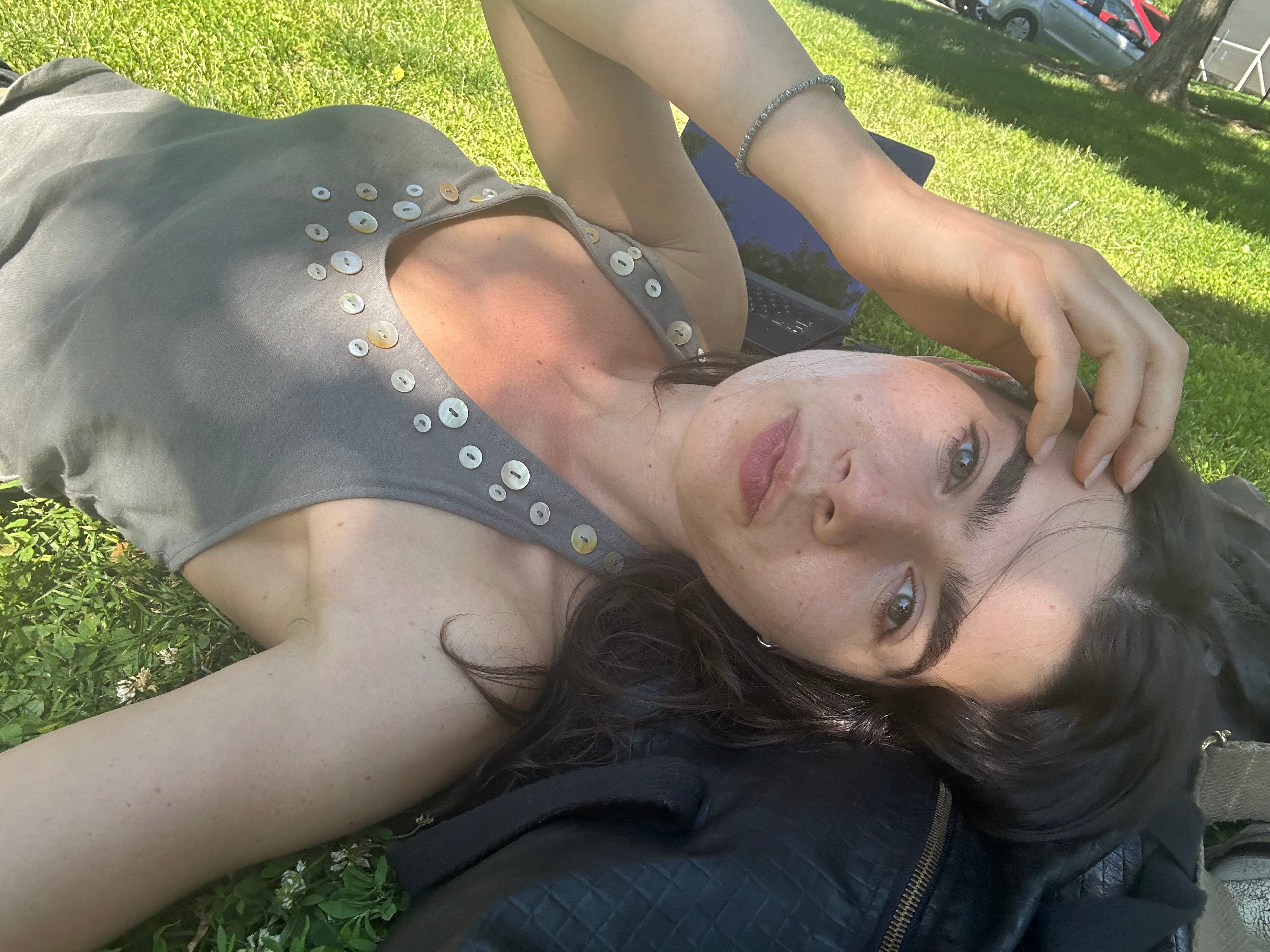
Lily Sperry is the creator of Health Gossip, which she launched in early 2023. The name appeared to her in a dream.


#100: Lily Sperry
Chicago, Illinois
What does health, or being healthy, mean to you?
Our capacity to receive and participate in the world around us. To meet life fully; to appreciate and cultivate beauty. To give from an overflowing cup.
When I feel most healthy, I feel most clear, like I have the energy to fully shine my light and give that light to others. When I feel least healthy, it’s when I’m only thinking about myself.
How would you describe your current lifestyle?
Urban-ascetic-contrarian.
How do you start and end your days?
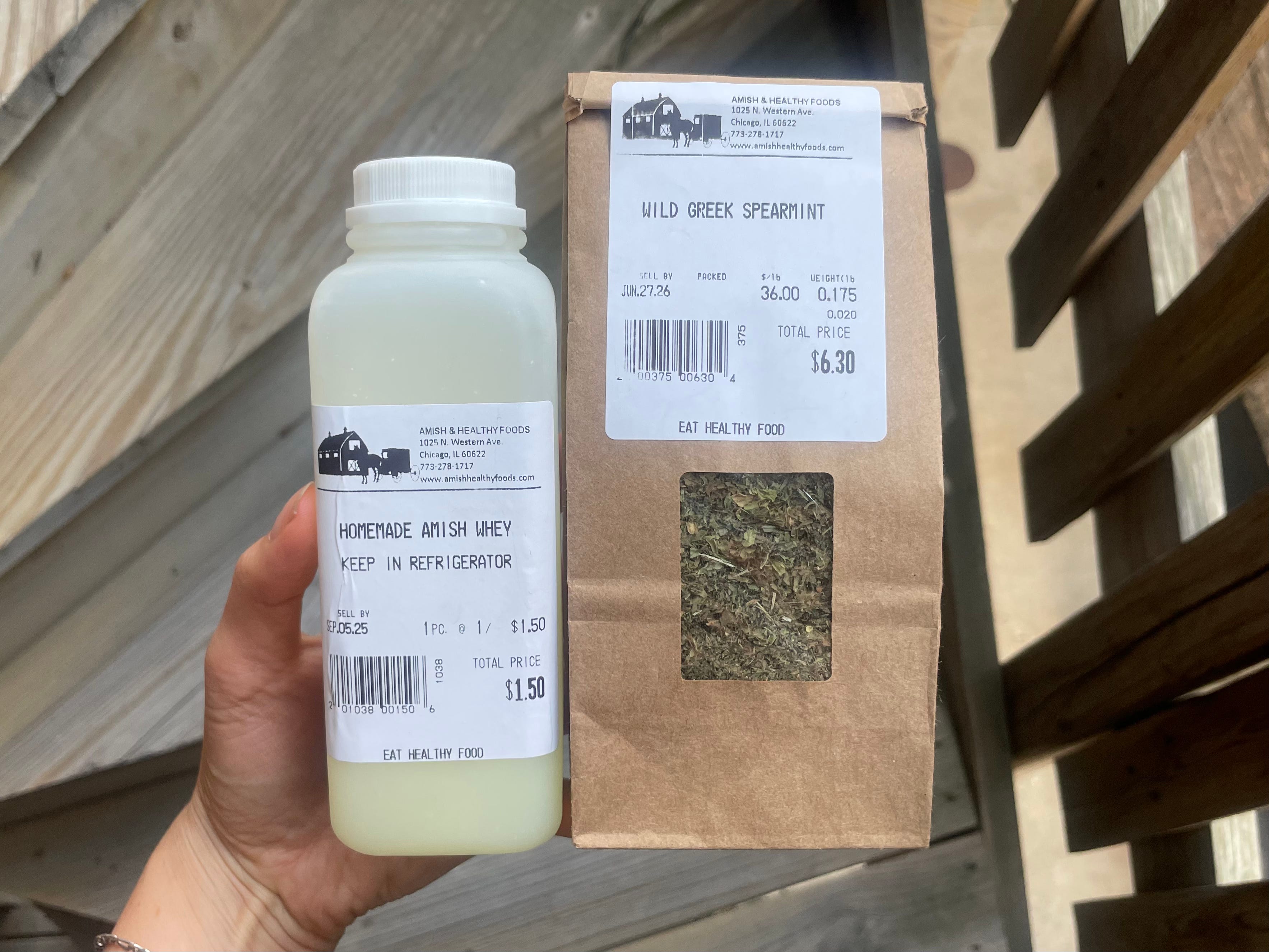
I start most mornings walking outside, often while sipping from a cup of warm broth or herbal infusion (lately: nettle, hibiscus, and dandelion root).
Over the past few years, this has been my most consistent, and most necessary, routine — originally born out of a desire to normalize my circadian rhythm, only to realize it had a ripple effect on my overall mood, energy levels, and sense of peace.
I firmly believe that the way we start our days determines the spirit of that day. It’s important to connect to ourselves and be conscious of what we’re consuming in that vulnerable, post-waking state.
Before I leave the apartment, I’ll oil pull, take a flower essence (if I’m working with one), and drink mineral water with any empty-stomach supplements.1 Lately, I’ve also been doing a lymphatic + dry brushing routine, which I’ve written about elsewhere.
When I return home, I focus on nourishment: breakfast, which normally looks like some combination of a raw carrot salad, eggs with sheep or goat’s milk cheese, and sauerkraut. Now that it’s warmer out, I’ve been enjoying a smoothie with wild blueberries, coconut milk, and bone broth protein. I drink matcha or coffee most days, usually at a cafe.
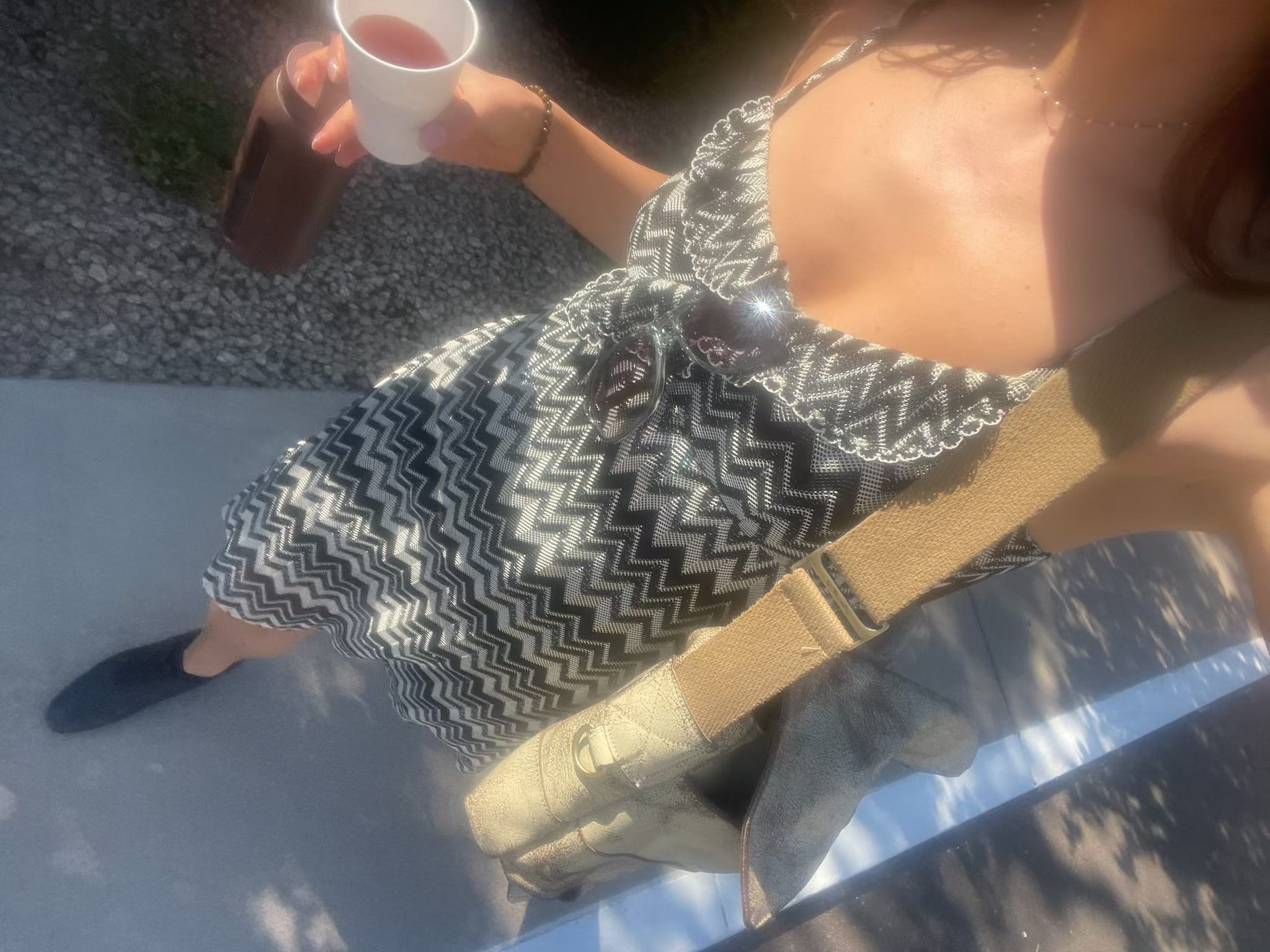
I really value movement and seek to always be out and about, ideally only home in the early morning and late at night. I don’t want to live in a city forever, but am grateful for the flaneur lifestyle that it permits.
After breakfast, I leave the house to start my workday (outside of the newsletter, I work in marketing). If time allows, I’ll either go to the gym before work or during my lunch break, where I do a mix of calisthenics, weightlifting, and pilates depending on the day.
I walk for at least an hour every day, ideally listening to nothing, breaking my “music fast” at the gym with trashy Belgian house music and religious chants.
By evening, I’m usually quite exhausted, and like to keep things simple: Cook a nice meal, keep the lighting dim, read or write, clean, take a bath...Lately, I’ve been allowing myself to go to bed as soon as I feel like it, sometimes as early as 9pm.
Can you recall a moment when you became more aware of your health, or your relationship to it changed?
Of course. Many moments. I think I may be going through a moment right now.
The first was a series of accidents in early childhood, which feel a bit minor now but definitely had an impact on my overall outlook on health and expression. At the age of five or six, I was in a park showing off to a friend “how far I could jump” off the curb, then jumped straight into a tree trunk. I got stitches. Around that same time, I was “ice skating” in socks on the hardwood floors of my father’s house and face-planted. It didn’t particularly hurt, but my face was bruised for a week or so after (which, to a young girl, almost felt worse than a broken bone). I put sparkles on my nose in an attempt to make the bruises more palatable to my kindergarten audience.
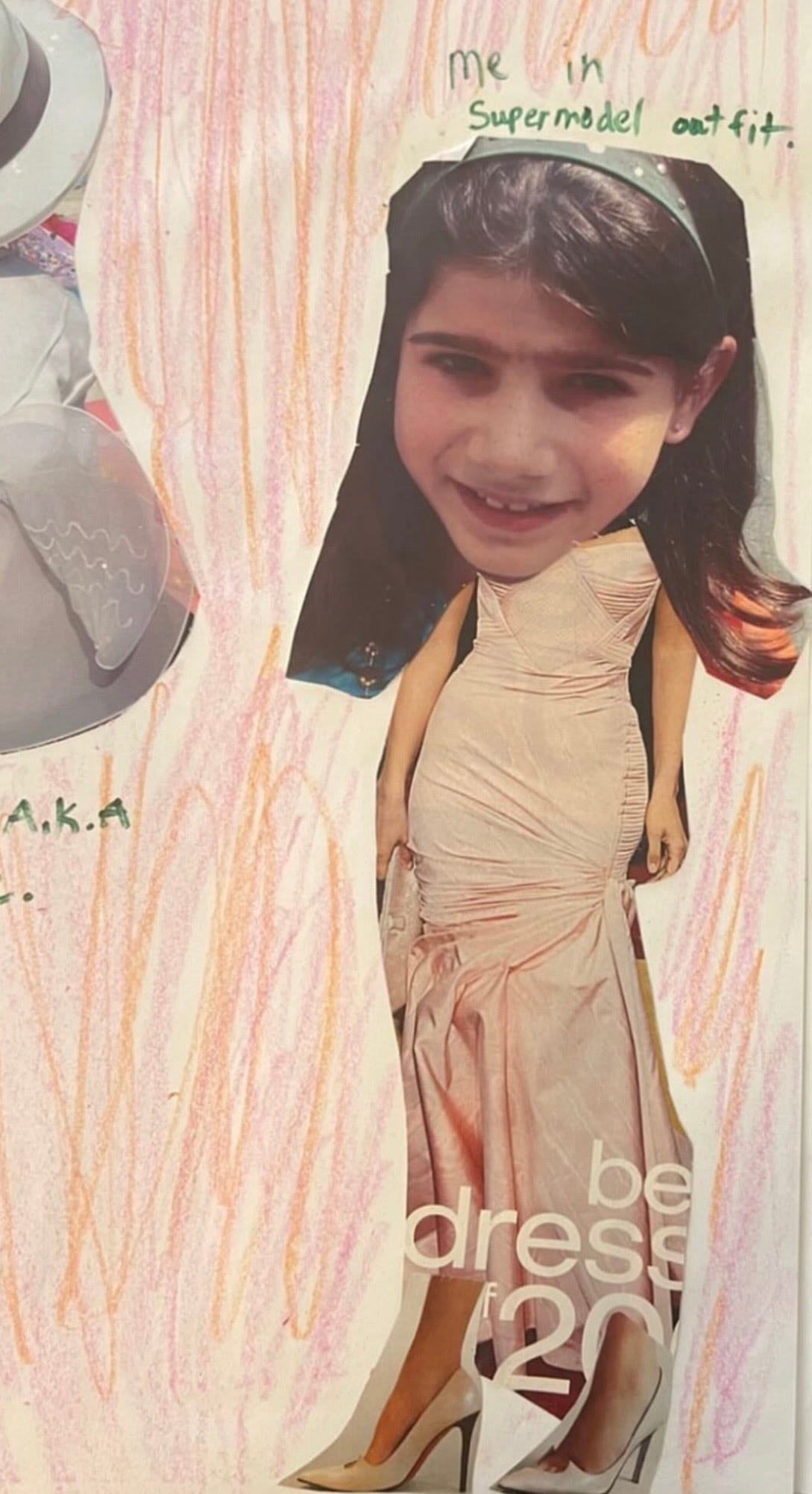
In both of these experiences, I think I realized — literally faced — the fact that my actions had consequences, and, to a lesser degree, that my self-expression had to be tempered or controlled in order to stay “safe.”
(This shyness would carry me into college, where, I later learned, a friend of a friend thought I was a Russian exchange student.)
In the moment I’m in now, of once again becoming conscious of my “health,” a similar theme is resurfacing (maybe because I’m living in the same city where I grew up). I’m noticing the rigidity that has become my default over the past few years, despite leading a fairly spontaneous, bohemian, connected life. I’m reminded of a sculpture an old friend once titled after me: “Lily, All Buttoned Up.”
In my heart of hearts, I don’t relate to this rigidity. Inside, I feel like a wild, freedom-oriented woman, one who lives in the country with her family and a black convertible Jeep Wrangler Sport. And yet, I still find myself defaulting to the monochrome urban costume; to blow-drying my hair. Perhaps these are the last gasps of a Falsified self.
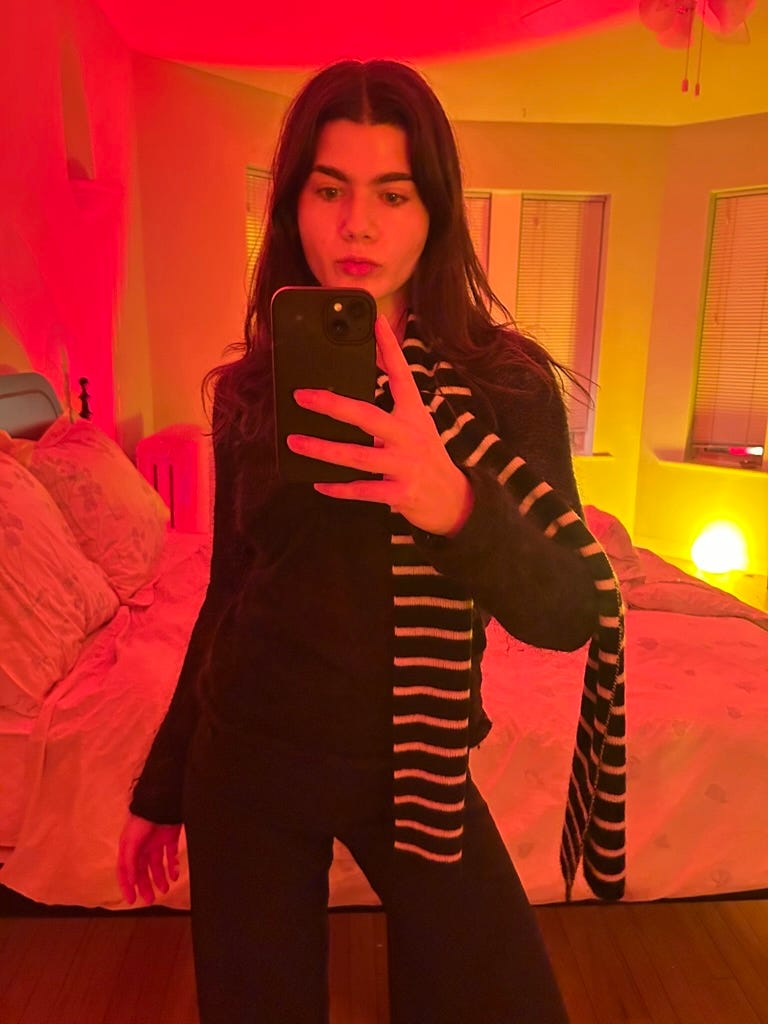
I think it’s the work of a lifetime to be fully expressed — and even then, there’s always a gap between who we are and how we’re interpreted. With time, I’ve learned to not be so focused on narrowing it.
And what a blessing it is to have that interiority; to have something, some place, that’s just for us and God.
Do you have a spiritual practice?
After a period of early-20s agnosticism and flirting with pop spirituality (more on that below), I am reengaging with Christianity again.
This has been a process, and one I’m still very much in the midst of. As someone who is naturally quite curious and mutable, I’ve noticed a resistance to committing to an organized religion, and also a lingering attachment to systems and practices that run counter to it. But I think whenever we feel resistance or fear towards something, that’s a sign that we must pursue it. Alas, there is no Perfect Christian.
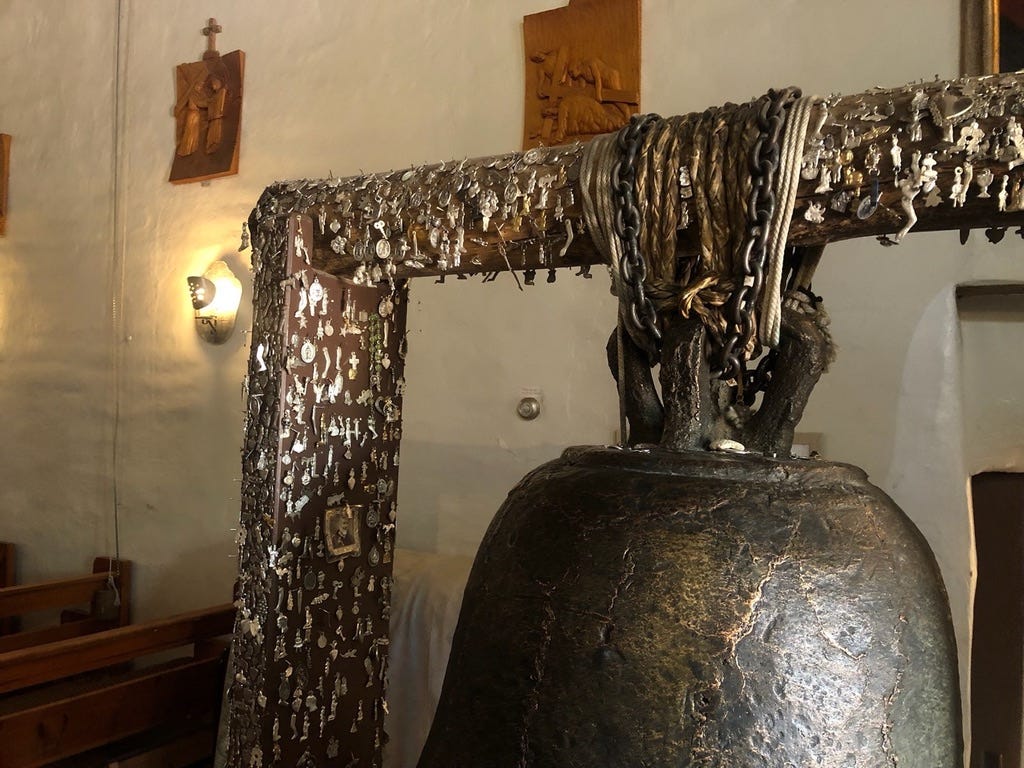
My journey through and out of New Age spirituality has been winding. After a series of awakenings in the years following 2020, I felt a veil being lifted and wanted to explore everything on the other side. What began with Rudolf Steiner and the Christian mystics evolved into a deeper engagement with astrology, Human Design, manifestation, and eventually Kabbalah. I was hooked.
But, like many, my relationship to these systems and modalities was ultimately that of a dilettante. I never fully committed to any one path, preferring to create my own spiritual system rather than anchor into a singular Truth. This left me confused, circling myself, with endless rabbit holes to dive into and no clear place to land. It also fed a kind of narcissism, where I was more focused on “fixing” myself and reaching a higher state of consciousness than being present with the world around me.
With time, I’ve found that the latter is actually a far more spiritual, and far more difficult, pursuit.
When I attended Divine Liturgy for the first time, something clicked into place. I finally felt held, like for once it wasn’t all up to me. I remember walking in, met with the haze of burning frankincense and timber of Byzantine chants, and understanding, on a visceral level, what “God-fearing” really meant. The acknowledgment of a higher authority, of divine law; of the reality that there are things objectively “right” and “wrong,” and that our actions have consequences — these are all truths that our modern, pleasure-oriented society loves to dismiss. Returning to them has given me a sense of peace that affirmations and chart-reading never quite did.
There’s a quote that I recently rediscovered from one of Manly P. Hall’s lectures, where he says that we can change human laws, but divine laws are meant to change us. Religion reminds us of the moral universe.
What’s your relationship to self-healing?
As someone who doesn’t often trust the popular narrative, I’m a self-experimenter by nature. In the past few years, I’ve reoriented much of my approach to health to be less informed by external advice or “experts” and more centered on my own inner knowing — with the understanding that it will guide me to the right modalities and people, should I need assistance.
(That’s an amazing prayer, if you’re struggling with some sort of perplexing ailment: God, bring the people and modalities into my life that will help me heal.)
People sometimes interpret the self-healing question quite literally: Do you believe that you, alone, can heal yourself? But, by virtue of being alive, we’re always in relationship — to our environment, to the people around us, to ourselves. In my view, when we aren’t in right relationship with those things, that’s when symptoms and imbalances arise.
I’ve said this before, but I think in order to be “healthy” in our current conditions, we have to live a bit alternatively. This is, in part, why I’m drawn to the guests that I am, and why the newsletter doesn’t feel so literal in its approach to health and wellness. I’m far more interested in hearing about someone’s goat milk water-flossing routine or pregnancy dreams than the 30 supplements they take every morning.


When we see people going deep in the biohacking direction, I think it’s because, deep down, they know they’re living in a way that is quite unnatural and feel the need to balance it out. But the way that we “balance it out” matters, especially when we consider how many things are marketed to us that we can simply create for ourselves, through living, or simply find in nature.
Sometimes, I really feel like the people who don’t think about their health much are the healthiest.
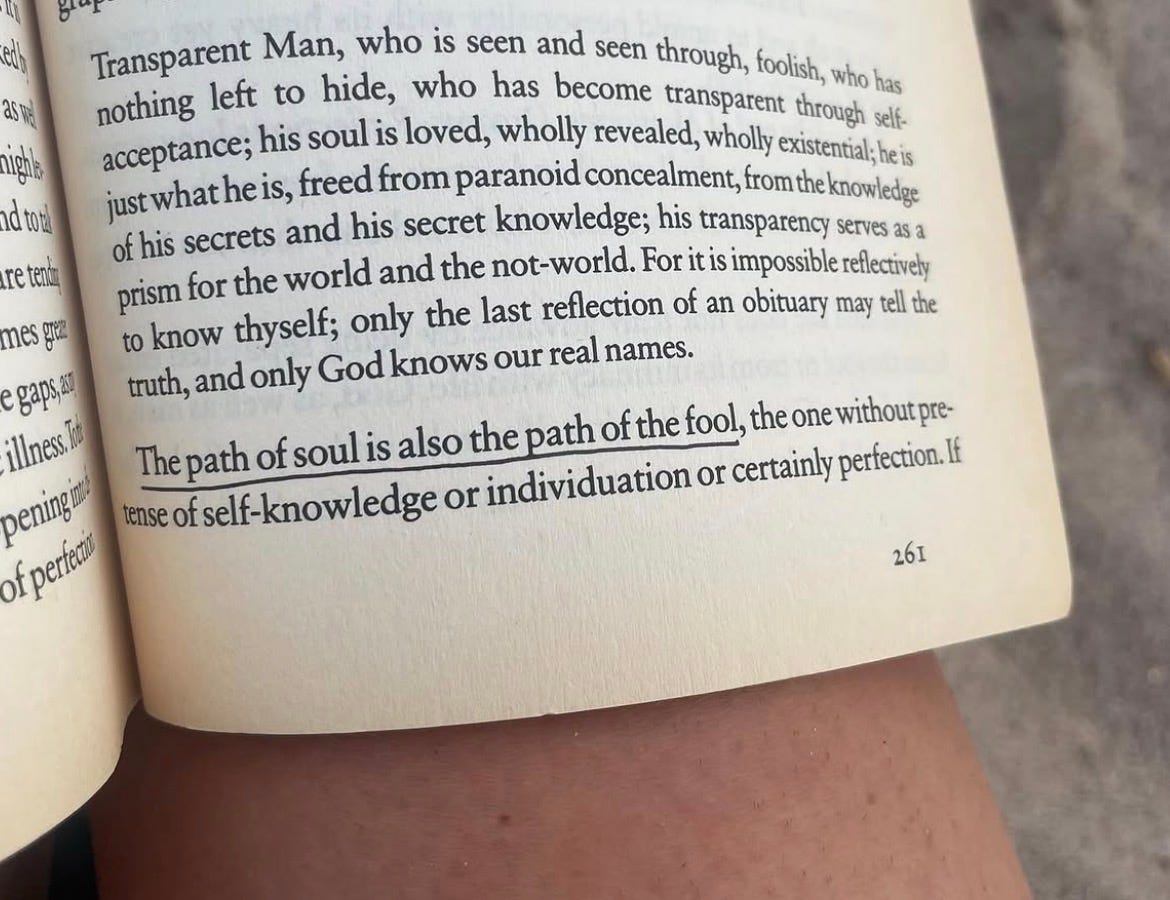
Do you work with any practitioners, texts, or modalities on a regular basis?
I haven’t been to the doctor in over a year, and don’t really feel the need to now (beyond getting bloodwork done). Diagnosis is a kind of spell-casting, and the practitioners that we choose to surround ourselves with matter greatly in our healing journeys. Everything affects everything.
The most life-changing doctors that I’ve seen have functioned more like teachers (the true meaning of “doctor”). I feel like I’ve spent the past few years integrating what they have taught me.

When do you feel the most nourished?
Rolling around in the grass in the sun, temperature 65-82 degrees. Laughing with friends at a beautiful dinner, ideally one made by us. Acknowledging my needs, and allowing them to be met, without retreating into the (perceived) safety of solitude. Experiencing the abundance of nature and thinking, What more could I possibly need?
How do you reset?
These days, sleep and slowing down are often the best ways for me to reset, particularly if I’m feeling depleted or drained. Following my move out of NYC last year, I’ve felt myself entering an entirely new chapter. The transition out of the old and into the new has been a bit destabilizing, requiring a level of slowness and patience that doesn’t always come naturally to me. I’m learning how to tend to and be present with the beauty around me, rather than living out of pure utility. I’m learning how to be a woman, rather than a girl or a machine.
On days when I’m not working, I’m a big fan of having my phone on airplane mode and doing something super simple, like taking a leisurely walk or reading in the park. I’ve been revisiting fiction, most recently Natalia Ginzburg and Louise Glück.
I think it’s our right as women to rest as often as we please.
But, in other moments, it’s action that we need. When I’m feeling stagnant, I love to shake, dance, run, sweat. Talk to strangers, or God, or myself, out loud. Get out of my head. Deep clean my apartment. Do the things I’ve been avoiding.
These actions can be restoring or depleting, depending on where our systems are at. I often return to the phrase, “The opposite is the medicine.” If what you’re doing isn’t working, go another way.
Do you have a favorite meal?
In recent years, I’ve found that repetition works well for me (this is the case for meals as well as routines). My digestion functions best when it knows what to expect, especially if that food is local and in season.
Currently in rotation: baked chicken thighs, steak tartare, homemade bone broth, baked Japanese sweet potatoes, ground beef and rice...I agree with chloé happe when she says that gym bros are enlightened beings. An underrated health “hack” is reducing the number of decisions we make per day — and keeping meals simple, predictable, and meal-prepped is a great way to do that.
What advice would you give to your younger self?
Honor your vision and don’t sacrifice your truth for a temporary high. The right ones will come if you let them.
What advice would you give to the person reading this?
Have the courage to go your own way.
What would you like to see or create more of in the world?
Physical skills. Cloudbusting and weather modification awareness. Gyms with natural lighting, 432 Hz music, and structured / spring water on tap. Tan lines. Healed male-female dynamics. PDA. Discernment.
The throughline of all of these is less energy spent on reacting and more energy spent on creating. The latter will lead to the desired outcome of the former, anyway.
Related reading:


Currently: lactoferrin, Nattokinase, NAC + liposomal glutathione. I’m usually more of a minimalist, but am on a protocol to improve liver bile flow and gut motility.
Loved reading this and learning more about your personal health philosophy, which is very grounded in truth, simple, and inspirational. I can relate to the struggle with internal rigidity despite living a bohemian and unstructured life. Here's to un-rigidifying ourselves this year. <3
Inspired by all of this - incorporating the physical, the emotional and the spiritual.... getting back to the basics. Feels like the kind of Health I want to be pursuing.