

Grandma Gossip: Sarah by Claudia
"I could go out in the garden in the summer and just pick a ripe tomato and eat it; it was like eating sunshine."
We’re back with another round of Mom Gossip, and this time it’s Grandma Gossip — a special heart-to-heart between friend-of-the-letter, Claudia Azalde, and her grandmother, Sarah.
This conversation took place at Sarah’s home in Silver Spring, MD, just before her 90th birthday in September. It spans everything from her farm upbringing and decades as a director of Christian education, to her rug hooking practice and strategies for handling “annoying people.”
Truly so honored to share these stories with you. I’ll let Claudia take it from here :)
Grandma Gossip: Sarah by Claudia
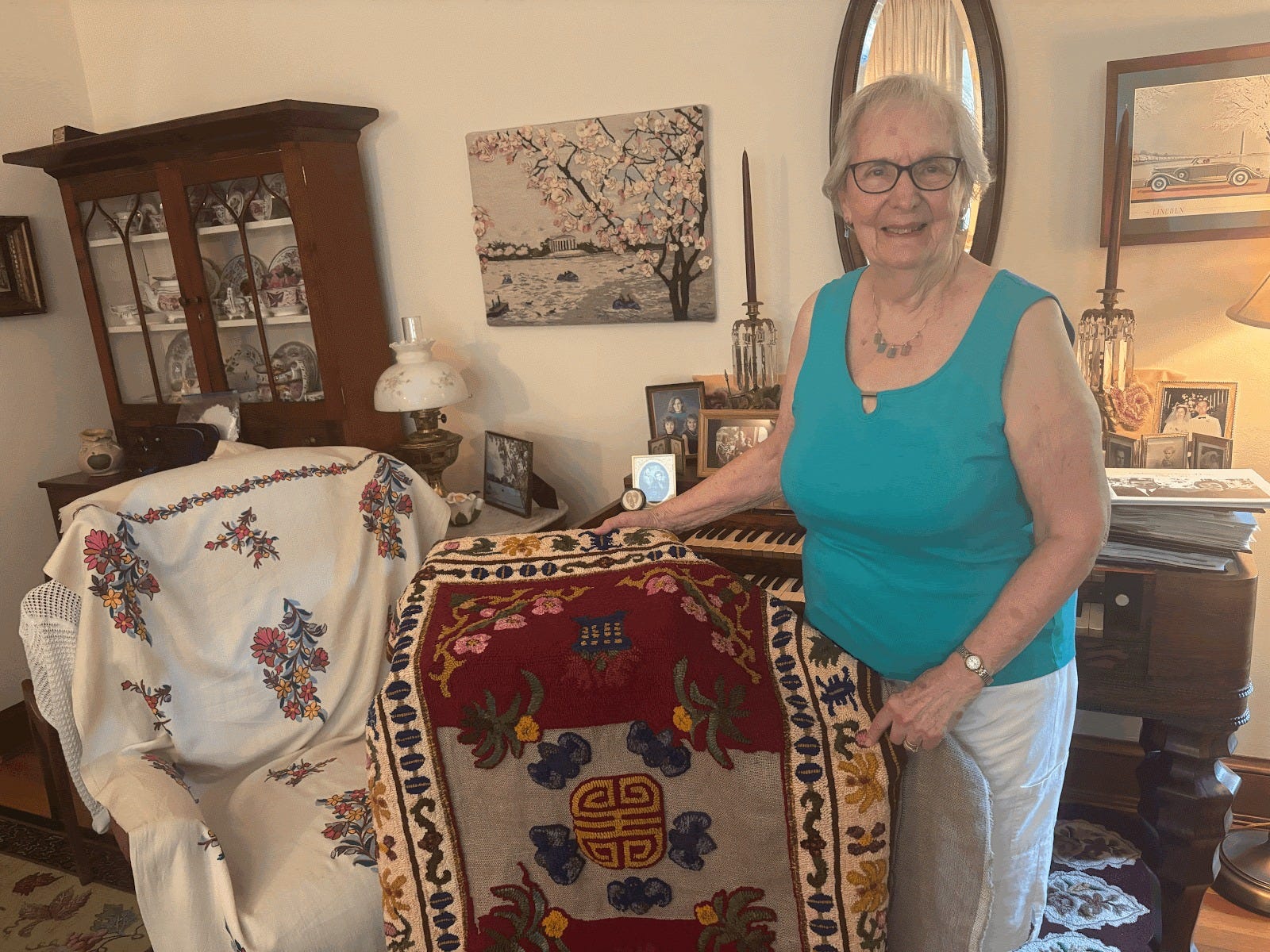
My grandma just turned 90 in September and has a very vibrant social life and artistic practice. She grew up on a farm in Richmond, VA, and now lives in Silver Spring, MD. I am inspired by her way of paying close attention to the natural world and changing of the seasons, as well as the kindness she bestows on everyone around her. —Claudia Azalde


What does health, or being healthy, mean to you?
It means your whole approach to life — what you eat, and what you do. To be positive, happy; to look around you and see all of the good things that we have and to be thankful for those.
I think your mental health affects your whole body. In the doctor’s checkup, they always ask you how you feel emotionally… It’s so good that they are asking that.
How do you start and end your days?
I have a little prayer that I say each morning from Martin Luther:
Thank you for a new day and protect me during this day and keep me from sin. I commend my life to you, my body, my soul and all that is mine.
I am religious. I trained to be a director of Christian education in college, and I felt called to do that. When I was growing up, we had a director of Christian education in our church, and she modeled helping young people. We had a youth group and went on trips and had programs and activities. That meant a lot to me, and I thought, “That’s what I want to do.” So I worked for 25 years in three different churches as a director of Christian education. It meant a lot to me in my life.
I like to go out and walk, particularly in the morning. My energy levels have diminished since having COVID, but I like to walk in the morning and in the evening around dusk.
I like to do some kind of creative activity in the daytime if I can, usually fiber art or watercolor. There are a lot of creative things you can do around the house as well, like rearranging your furniture or deciding what to wear or what you want to eat.
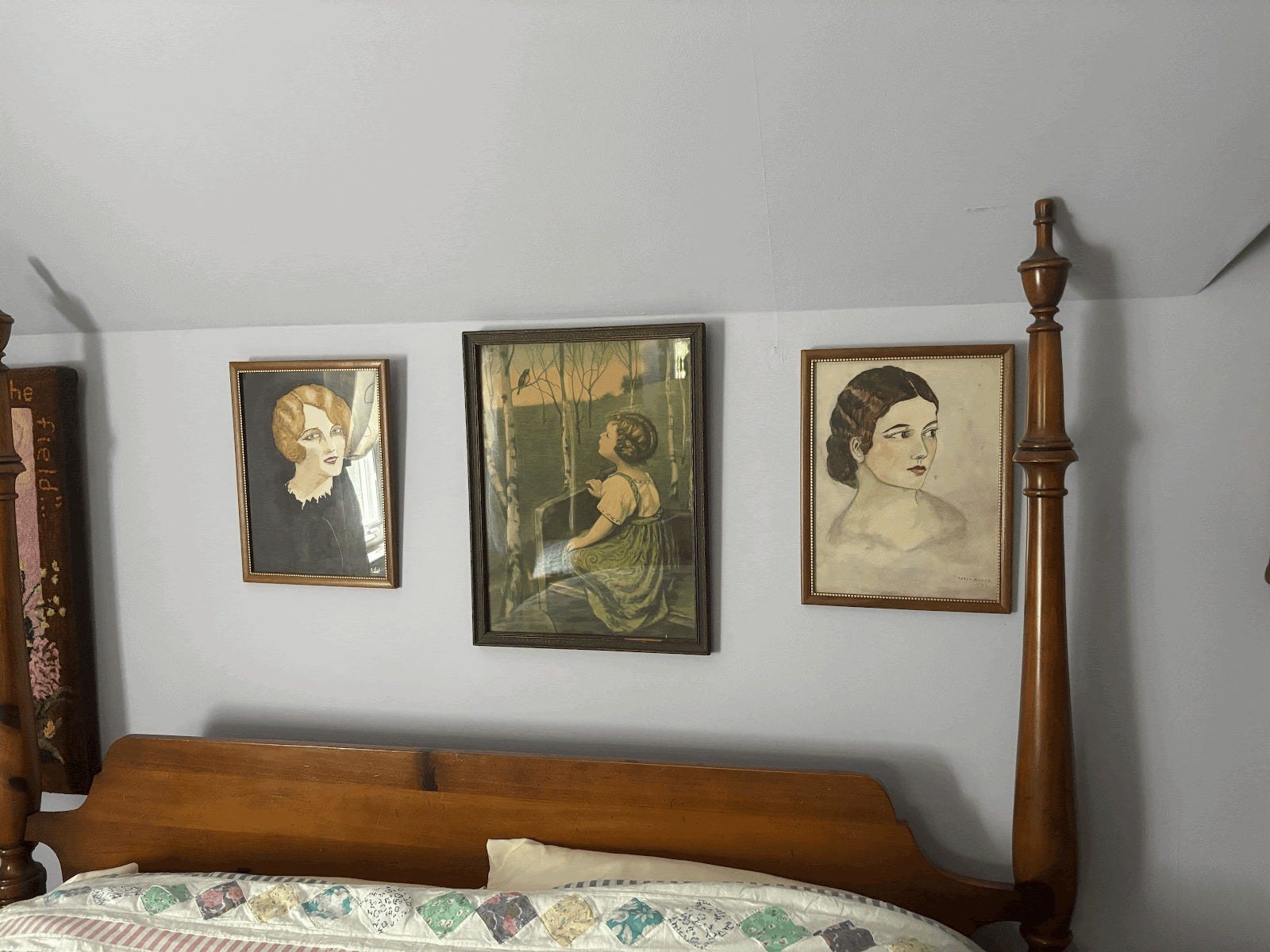
Now that I’m alone, sometimes I put flowers on the table or light a candle when I have dinner to make it special. I think that it’s important to eat slowly, and appreciate each bite. To taste your food, and enjoy it and not rush through it. That is something I work on every meal.
Are there any mantras or principles that guide your day to day?
In my old age, I’ve been trying to appreciate each moment and not think so much about what I’m going to do tomorrow. This is the day that God has given us, and we need to live that day and not worry so much about tomorrow. This is the day we have.
I had a friend, and she knew I was religious. She asked me, “Do you believe in God with all of these awful things happening?”
And I said, “Well, God is not doing all those things, we’re doing them and he gave us free will. We’re not puppets, he gave us choices and we have been making the wrong choices.”
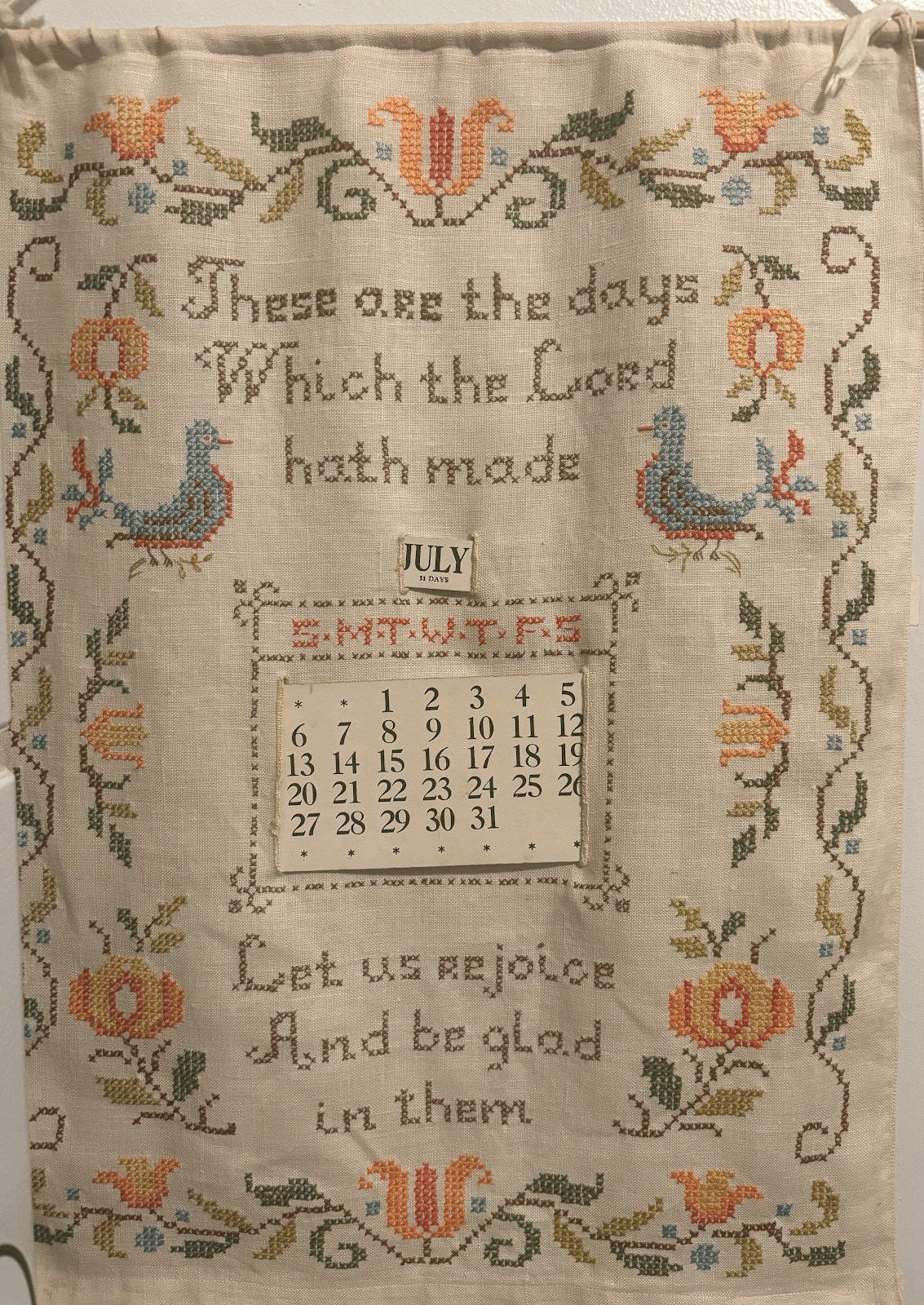
This friend was Buddhist, and I thought I might be able to learn something new from her because Buddhists have a lot of good qualities. She was over at my house one day and noticed the little hanging I have that is embroidered with the words, “This is the day the Lord has made, let us rejoice and be glad in it.” She read it and liked it so much. Later, she had ALS. Before she died, she wrote me an email saying how much she liked the quote.
What are your earliest memories of health?
I was so fortunate to have grown up in the setting that I did. We were outdoors, and I saw my mother gardening. I could go out in the garden in the summer and just pick a ripe tomato and eat it; it was like eating sunshine.
My dad built our house on the two acres of my grandfather’s farm that he had given us. We grew up with him next to us and my aunt across the way. We had a cow — one time we had a calf — and my dad bought 200 baby chickens every year and my mom dressed and sold the chickens. She made buttermilk, and I helped churn the butter. I saw my grandfather plowing the field with his mule; I never saw a tractor on his property. And the funny thing is, he grew eggplants and told us that they were mule eggs. I think I was half grown before I knew that eggplants were not really mule eggs.
Until I was 12, we lived on fresh vegetables; my mom canned and kept the vegetables through the winter. They were married during the Depression, and we were born just after. There were times when my dad struggled for work, but being on the farm helped us have good food. Sometimes we didn’t own a car; my dad rode a bike into Richmond to work. I know what it is to not have everything you want, but to appreciate what you do have.
What health or life practices did your parents pass down to you?
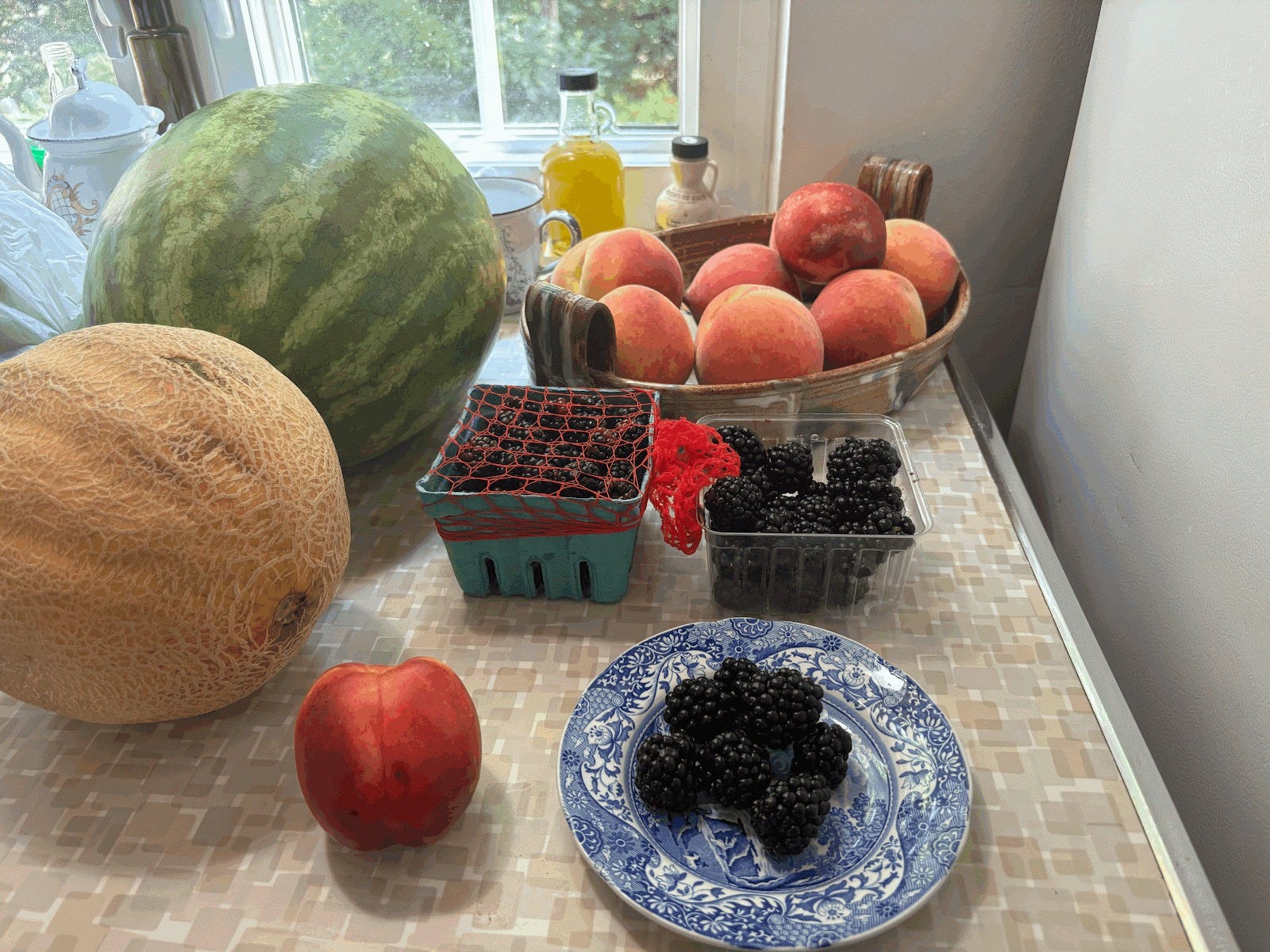
Well, something that’s being talked about now is eating seasonally. We ate seasonally because we had to. I learned that.
After I got married and went to my first farmers’ market, [it took] me back to my childhood. And now it’s very hard for me to go to a supermarket and buy produce because it never looks as fresh.
I was diagnosed with Celiac in my 60s, which is something you are born with. I think that a reason I was able to go through so much of my life without symptoms was because of the good nutrition that I had as a child.
What was it like growing up on a farm?
There were advantages and disadvantages. We lived out on the edge of the city of Richmond, so the streetcar line came out to the end of the city limits. It was probably a couple of miles to my home on the farm, and I had to walk that every day to go into town to school. It was hard, but I didn’t realize it then.
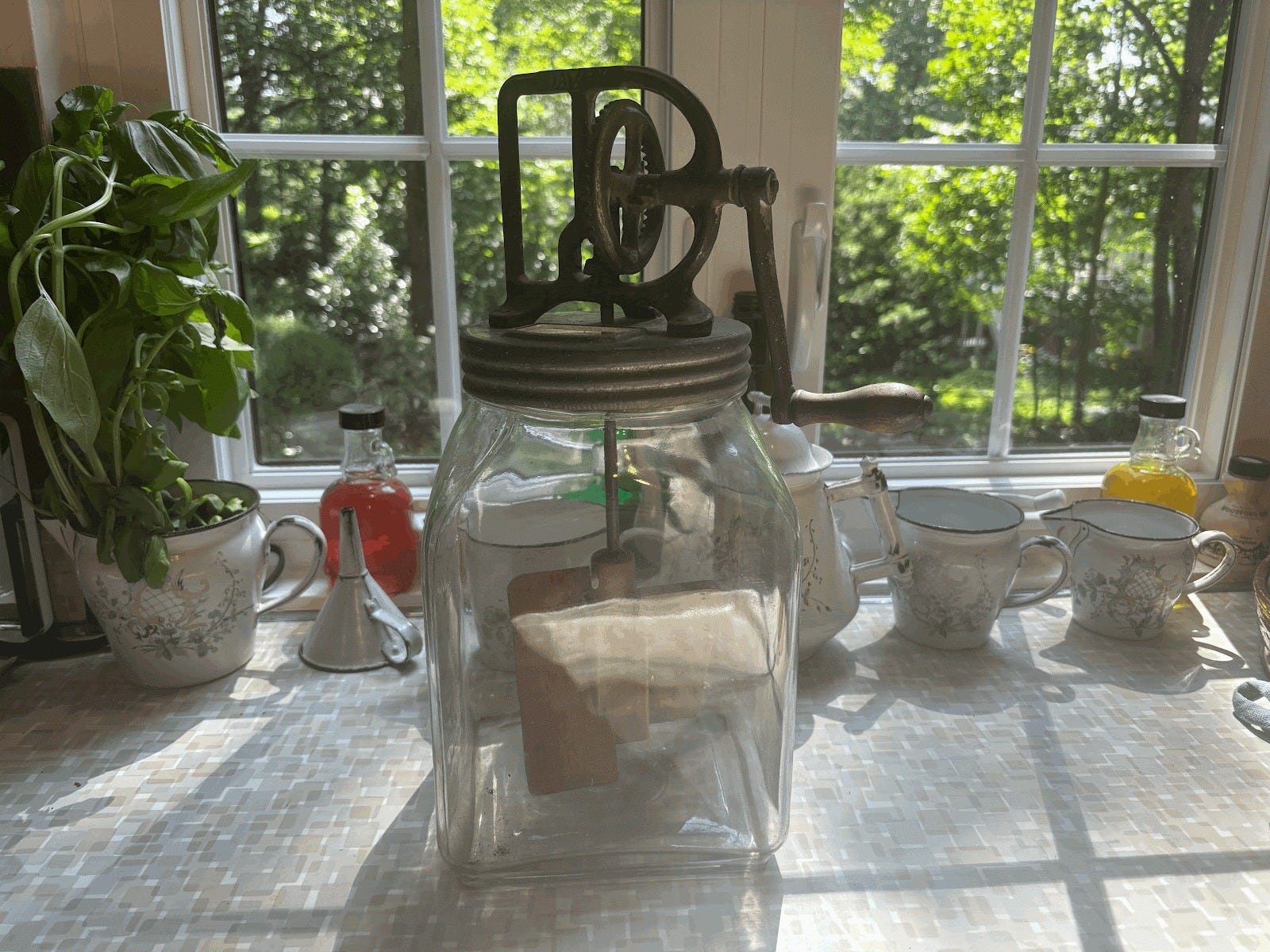
I loved school. I had three little brothers that I took care of, so I was busy; my dad made three little desks for my brothers, so I had to pretend play school all the time to keep them entertained. They would stop me and get in the desk to play gorilla or bear, whatever they could do to stop me from being serious and trying to teach them.
When we moved to North Carolina, we went to a small town, and that was totally different because then we could walk to our friends’ houses and to school. I was 12, which was a nice transition. I got to experience both.
How did growing up on a farm impact your relationship to health and food?
It helped me appreciate having fresh vegetables. I’ve always liked vegetables, and can’t think of any vegetable that I don’t like. I would go in the garden and pick peas and green beans and things like that. I knew where they came from and I knew what it took to grow them. My mom loved having her hands in the dirt, she loved having the garden, and we all had to help her. She had these really good watermelons and I never ate watermelon in the house. We always had it in the yard, and we could spit seeds at each other. They were just so good.
Do you think it’s important to know where your food is coming from?
I do. So many kids grow up thinking it comes in a package or out of the store. They don’t even know about the cow giving them milk.
I directed a nursery school, and we used to take the kids every year to a dairy farm so they could see the process. The lady of the farm went through the whole stages of milking the cows; she had a plastic cow with udders and showed how you put the machines on the cow. And at the end, a little boy raised his hand and asked, “How does the milk get out of the cow?” After she spent an hour telling him... I guess it’s a hard concept.
How would you describe your relationship to religion/spirituality?
It’s very much a part of my everyday life. I think we need to try and see each person as God’s child, no matter what we know about them. Whether they are religious or not, they are God’s creation and have dreams, hopes, and faults just like we do. We should try and see the best in them.
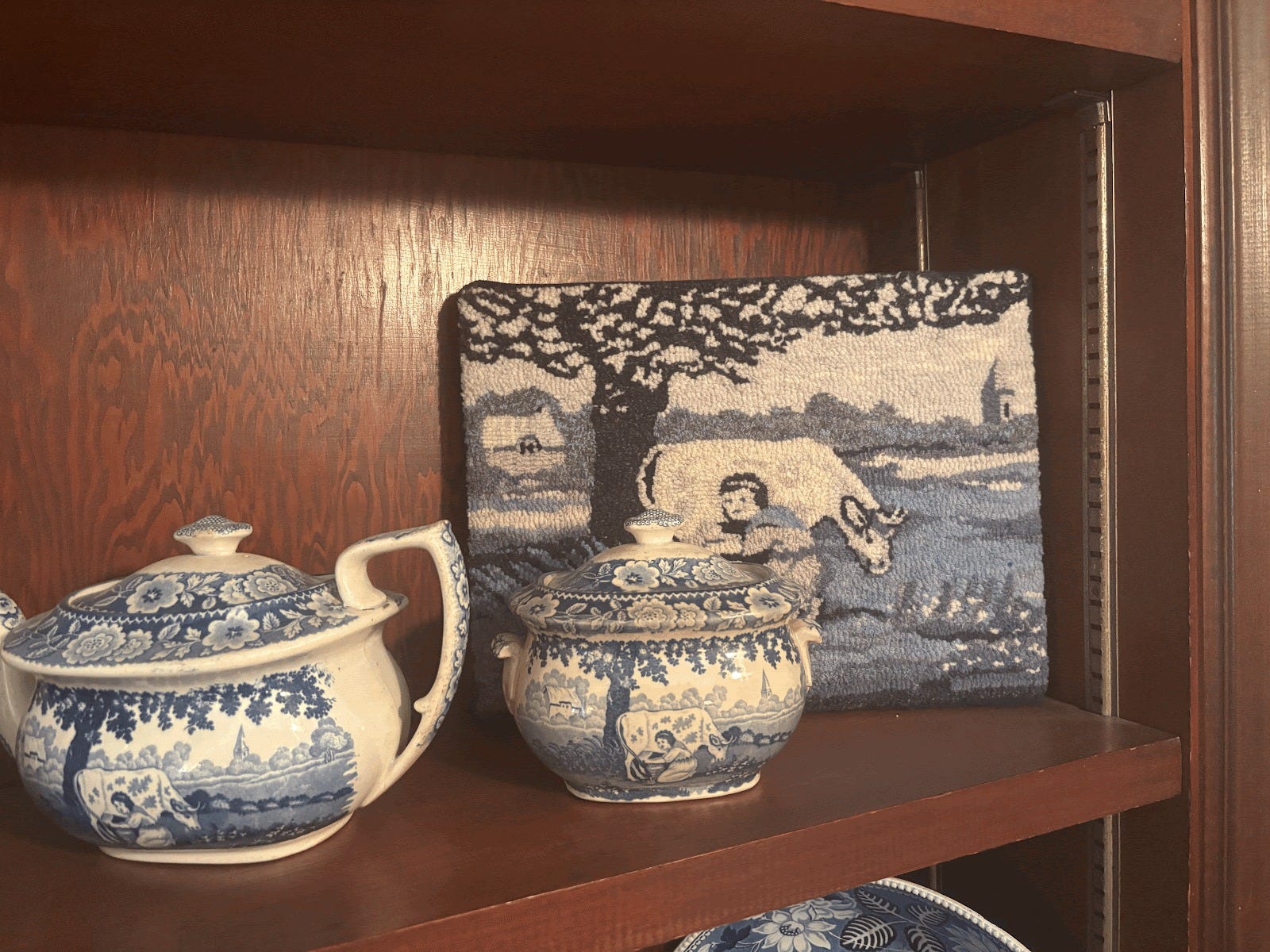
In the [rug hooking] retreats that I go to, there are so many different kinds of women. There are 15 women that come, and some are very annoying, they really are. I have to ask God to help me deal with them. We have to accept all kinds of people.
What is your strategy for dealing with annoying people?
I just try to see the best in them, remind myself that they are going through struggles and hardships, and, for some reason that I can’t understand, it makes them feel powerful to complain or to talk a lot. It’s a lesson in self-discipline, I have to say.
I think it’s hard to reconcile the evil that’s in our world. I can’t imagine how you, as young people, make it through. Every action you take is important. You might think that one person doesn’t make a difference, but every little bit helps.
What brings you fulfillment in life?
My creativity, and of course, all of my children and grandchildren. I enjoy working with my little class of rug hookers. I’m not even that focused on what I’m doing; I just love seeing what they’re doing and what they have learned. They’ve grown so much in the two years we’ve been having class. I’ve realized that in teaching, you get fulfillment in seeing the person develop. I’ve been rug hooking for fifty years now, and I get to pass on my knowledge to someone else and see their growth and enjoyment.
What advice would you give to someone my age?
Be true to yourself, follow your dreams, and be practical, too. It’s a combination, you can’t just live in La La Land.
I think that in my day it was easier. I was fortunate because when I got out of school, we all had a job placement, and I had several churches to choose from. When I got to my first church in Georgia, they had arranged a room for me to stay in at a lady’s house for $35/month. Housing wasn’t so expensive then. Of course, my salary wasn’t very high either.
Be open to possibilities in the world around you. Keep your principles and don’t compromise. Take advice from your elders, your parents…
The practice of gratitude is important. Not believing everything on social media; I think it is the bugaboo of your generation. So much of your culture is so materialistic, emphasizing looks and clothes, though I do think beauty is a gift and something to be cherished. There is so much to be appreciated, in nature and all that’s around you.
Note: This conversation has been edited for clarity.



What a beautiful soul, thank you for sharing her wisdom.